Funny Baby Clothes: What Feels Clever and What Feels Tacky
Humor works on baby clothing when the joke is designed to last longer than the laugh.
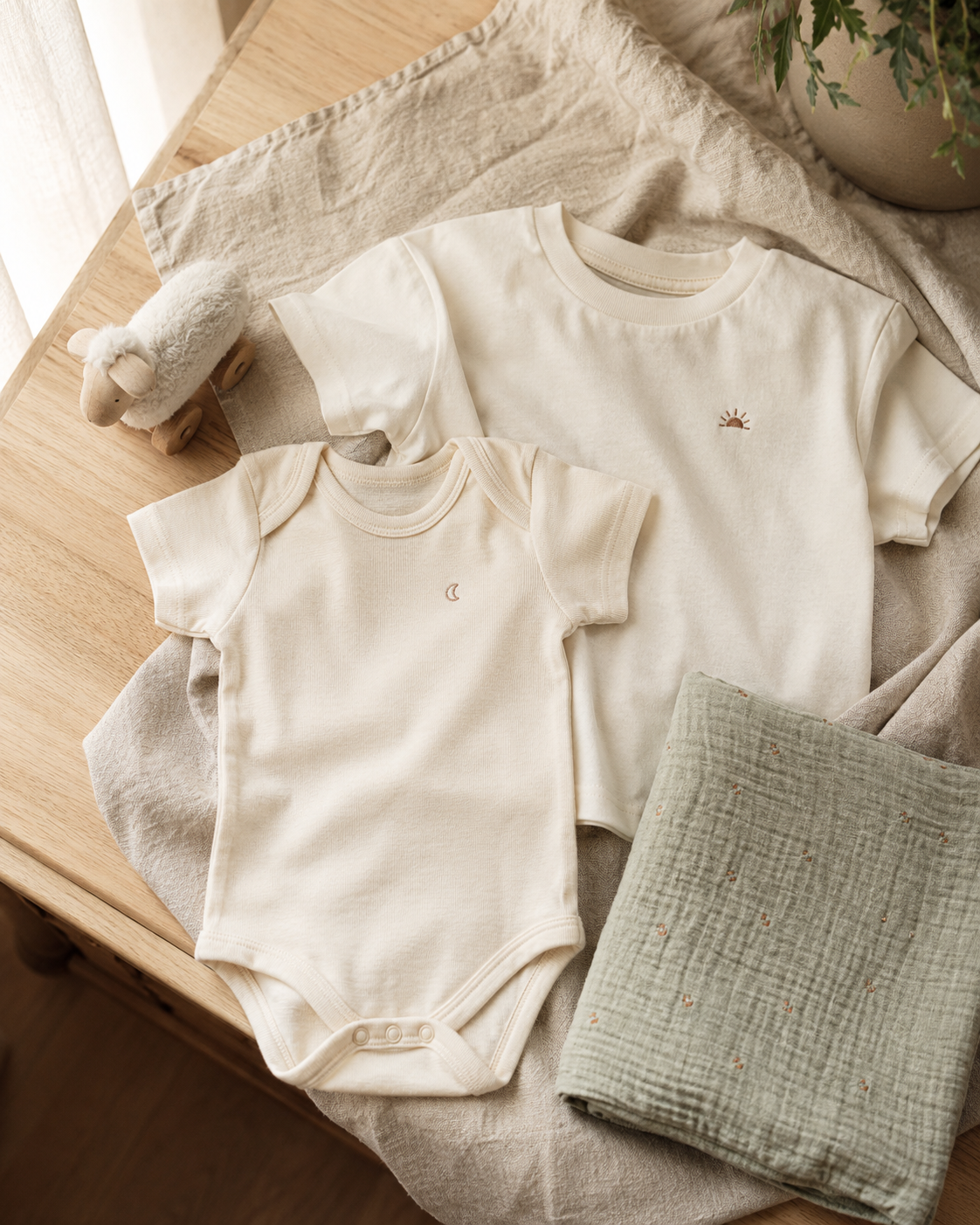
Funny baby clothes are not a bad category. They are a badly executed one.
The instinct is right. Babies are small, powerless, entirely dependent on other people, and yet somehow managing to run every household they enter. There is humor in that. The problem is not the premise — it is what gets done with it.
Most funny baby clothes are designed to land once: at the store, in the cart, in the gift bag. They are optimized for the moment of purchase, not for 40 wears and a real family photo. The joke is too loud. The font is too eager. The graphic explains the joke and then explains it again. And after the first time, none of it is funny anymore — it is just a piece of clothing you are still pulling out of the drawer at 6 a.m.
The better version is quieter. It starts with an actual observation about family life, not a joke template. It trusts the reader to get it without the clothing doing all the work. It is the kind of thing that photographs well at a first birthday and still feels right by the third wear. It looks like it belongs on a real baby in a real home.
That is the gap this guide is about.
Most Funny Baby Clothes Are Not Designed to Survive More Than One Laugh.
The category has a structural problem: humor that earns a purchase does not need to earn daily wear. A bodysuit that makes the shower guests laugh once has done its job by the time it is unwrapped. The brand’s incentive ends there. The parent’s inconvenience begins.
What this produces:
Punchlines instead of observations. A good joke has a setup and a punchline. A good observation is funnier than either, because it does not telegraph itself. “Born to nap” is a punchline. “Brb.” is an observation. One gets read once; the other lands again every time someone who has ever left a meeting to do something more important sees it on a baby.
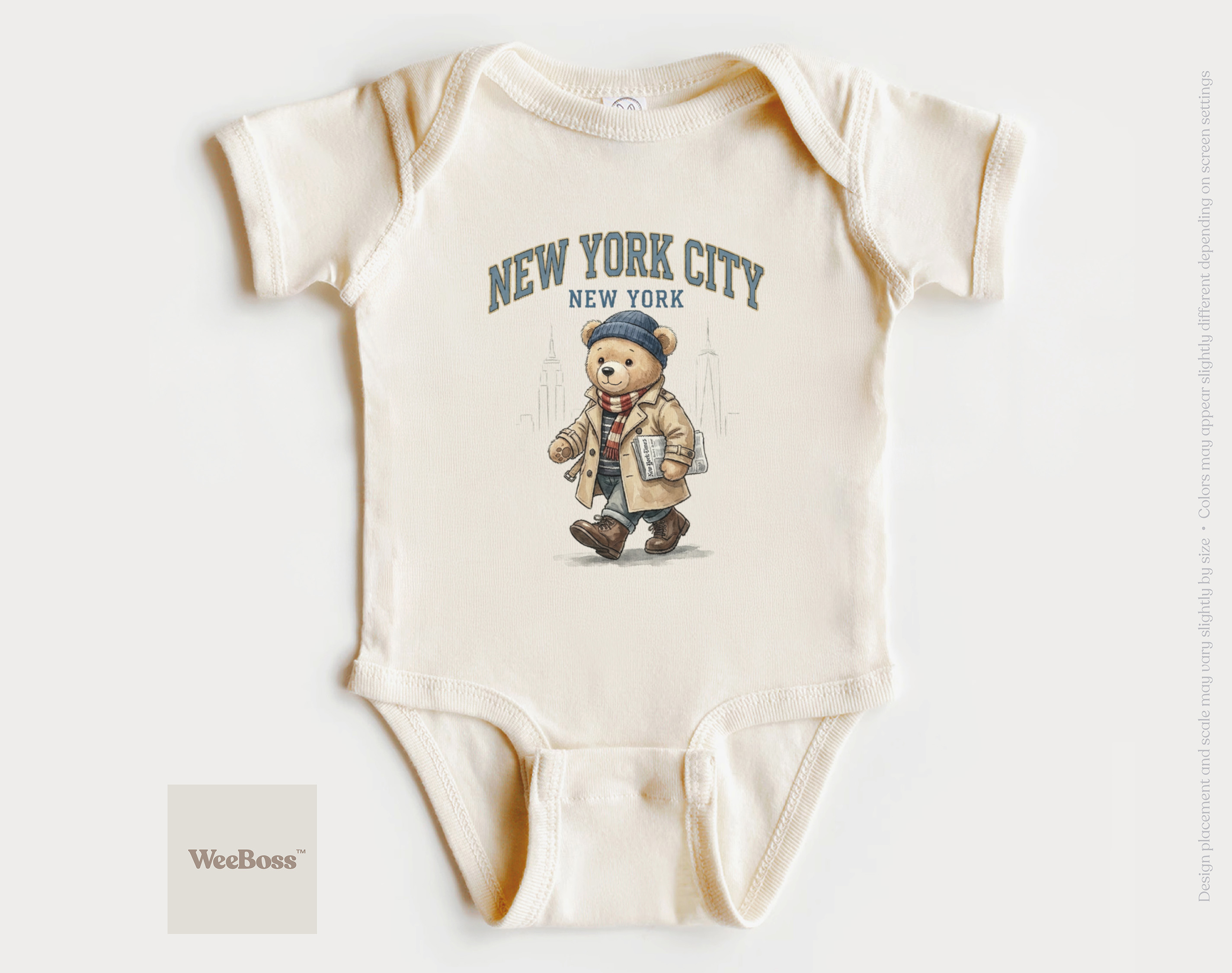
Over-design. When a phrase is strong, it does not need a graphic. When it is weak, designers add clip art, a matching border, a secondary color, and a font that tries to look handwritten. The result looks like the joke needed backup.
Cheap material that signals the whole gift. A funny phrase on a thin, stiff onesie tells the parent exactly what category of thought went into it. The material is part of what the joke communicates. Soft cotton does not guarantee cleverness, but flimsy polyester guarantees the opposite.
A joke calibrated for the wrong audience. Babies do not read. The humor on baby clothing is for parents, grandparents, friends, and people in the elevator. A joke that does not resonate with any of them — that only worked as a product because it was novel — is going to feel tired on the second wear.
Clever Humor Assumes the Reader Gets It.
The difference between clever and loud is not just taste. It is execution.
Clever humor trusts the reader. “Will Work for Milk” works because it winks at work culture without needing to explain itself. It assumes the person looking at the baby has enough reference points to make the connection. When humor talks down to the reader — explains the joke, underlines it, adds an exclamation point — it loses the thing that made it worth noticing.
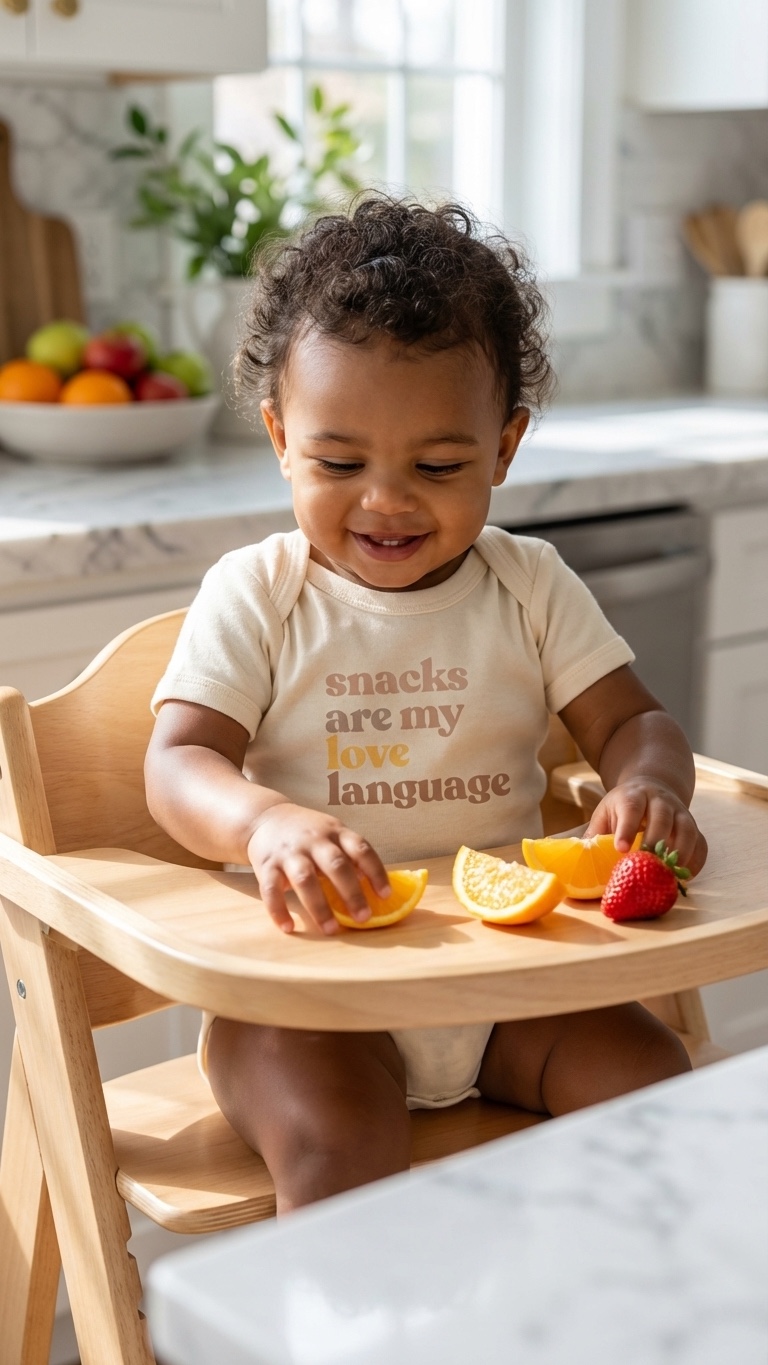
Clever humor comes from a real observation. The funniest baby pieces come from a specific, accurate observation about family life, not a universal joke template. “Snacks for Dinner” is funny because it is true — because some parents already run a household organized around snack time, and a baby wearing that phrase is simply a very small, very accurate family member. The humor lives in the recognition.
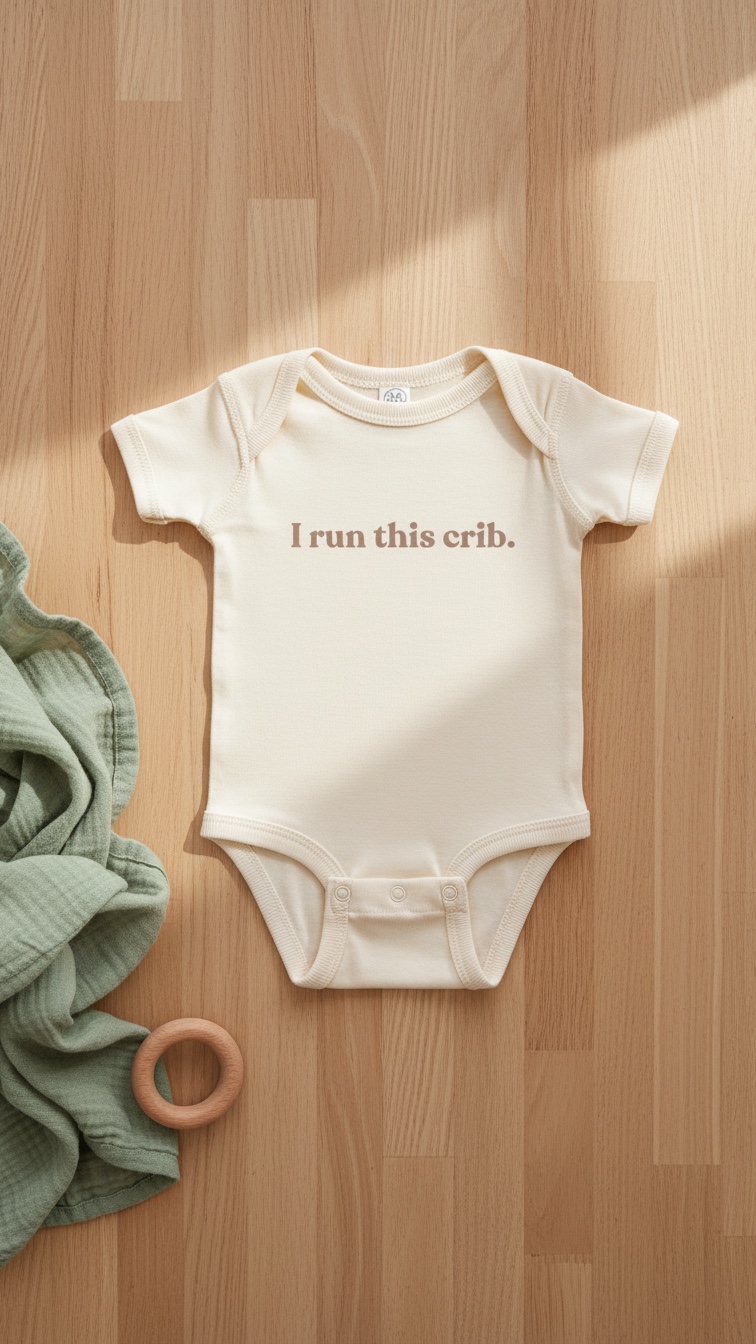
Clever humor does not need to be loud to be funny. Good typography, soft colors, and one clean phrase carry more than bold text in four colors ever will. The restraint is part of the joke. It says: we know you get it without all that.
Clever humor works across multiple wears. The first-week joke has short reach. A piece that makes the same person smile on the 15th wear has earned something. That usually means the joke has some relationship to an ongoing truth — about the baby, the household, or the dynamic — not a single moment.
Clever humor photographs without apology. The real test: would you put this in a photo and not feel the need to explain it to anyone looking back at that photo in five years? If the answer is yes, the piece is working.
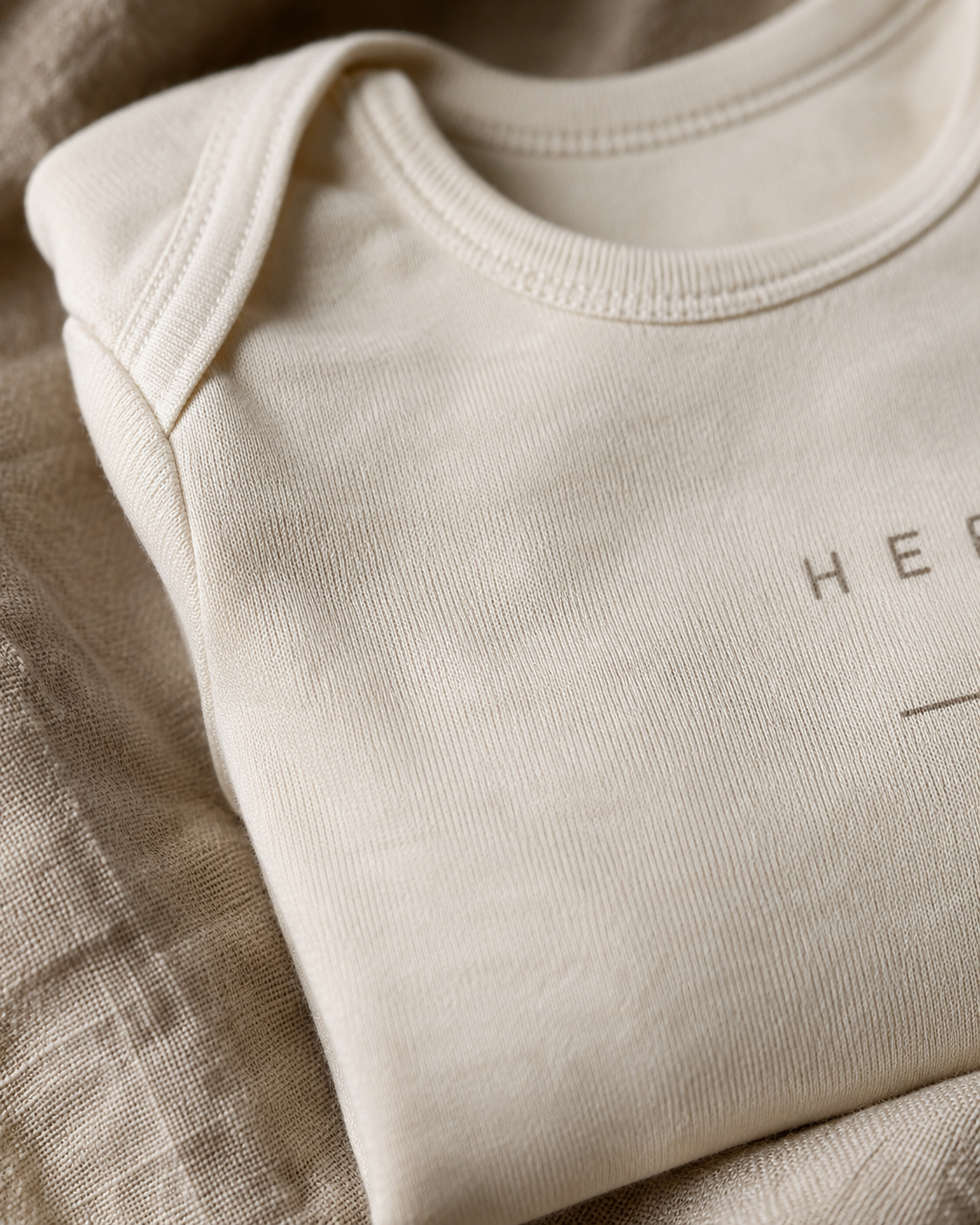
“The best funny baby clothes don't explain the joke. They trust the person holding the baby to already know it.”
Tacky Humor Is Designed for the Moment of Purchase, Not for Everyday Life.
Tacky is not the same as offensive. It is shallower than that. Tacky is humor that was never really designed to be worn — just to be laughed at in a store or unwrapped at a shower.
Multiple elements competing for attention. A phrase, a graphic, a secondary phrase underneath, a contrasting border, and a novelty font in two sizes. Each element was added because someone thought the joke needed help. The result is a piece of clothing that communicates “we did not trust the joke” before anyone reads the words.
Fonts that try too hard. Novelty scripts, uneven faux-handwriting, bold blocky letters that turn a simple phrase into a visual shout. The font is often where the execution falls apart. A quiet phrase in clean typography reads as chosen. The same phrase in an aggressive novelty font reads as produced.
Gender-coded humor with a binary premise. “Lock Up Your Sons” or its equivalent. “Future Heartbreaker.” The premise requires a gender-based narrative to land, and it usually ages badly within a season, if not a week.
Adult references used for shock value. There is a version of this that is actually funny — and a version that just puts adult content in small-print on a baby garment for a one-time reaction. The difference is usually intention. Humor that works is using the baby as a vehicle for a real joke. Humor that is just transgressive is using the baby as a delivery mechanism.
Cheap print quality. Cracked screen printing, faded heat-transfer graphics, colors that wash out in two cycles. The joke was designed to last until the purchase. The garment reflects that.
The category: “Parent Is Tired.” This one is its own lane, and it earns its place in small doses with good execution. A dry observation about sleep deprivation is different from a whole wardrobe built around one parenting complaint. When the humor is only ever self-deprecating and it becomes a category, it stops being funny and starts being a coping mechanism with a retail channel.
Some Approaches Age Better Than Others.
Not all humor categories are equal for baby clothing. Some hold up; some are already tired when you buy them.
Food and snack humor. This one works because it is accurate and it grows with the kid. A baby who will eat nothing but banana and crackers at 10 months becomes a toddler who negotiates every meal and declares emergency snack situations. The observation remains true as the child changes. It does not date.
Brief, dry observations about early life. “Brb.” “Currently unavailable.” “Resting baby face.” These work because they use adult vocabulary to describe a very small person’s situation without condescension toward the baby or the reader. The joke is in the displacement.
Work culture translated to baby life. “Will Work for Milk” is the canonical example. The baby has nothing in common with a job seeker except that they also have demands and an audience. The reference does not need updating; it lands for anyone who has ever been in a meeting.
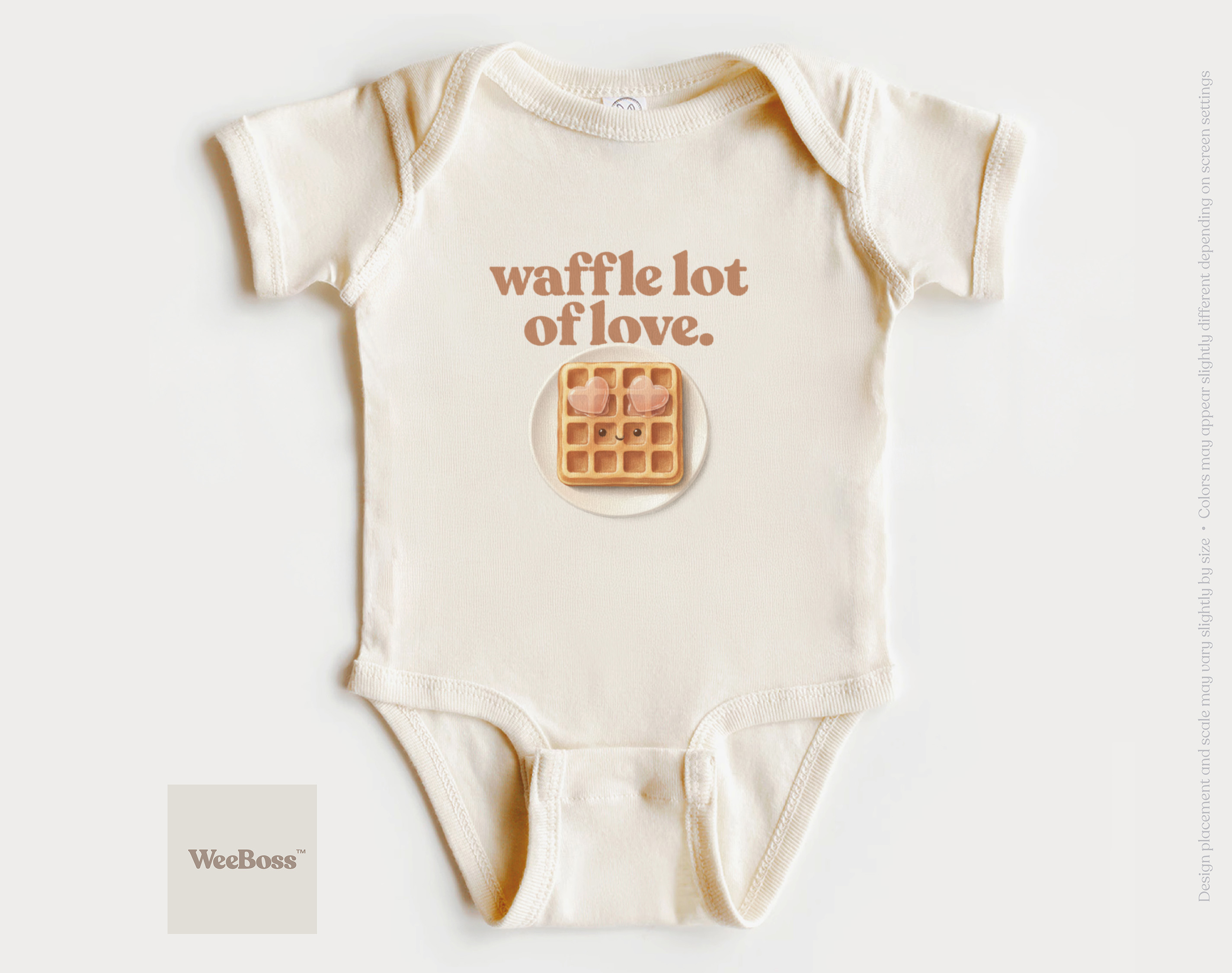
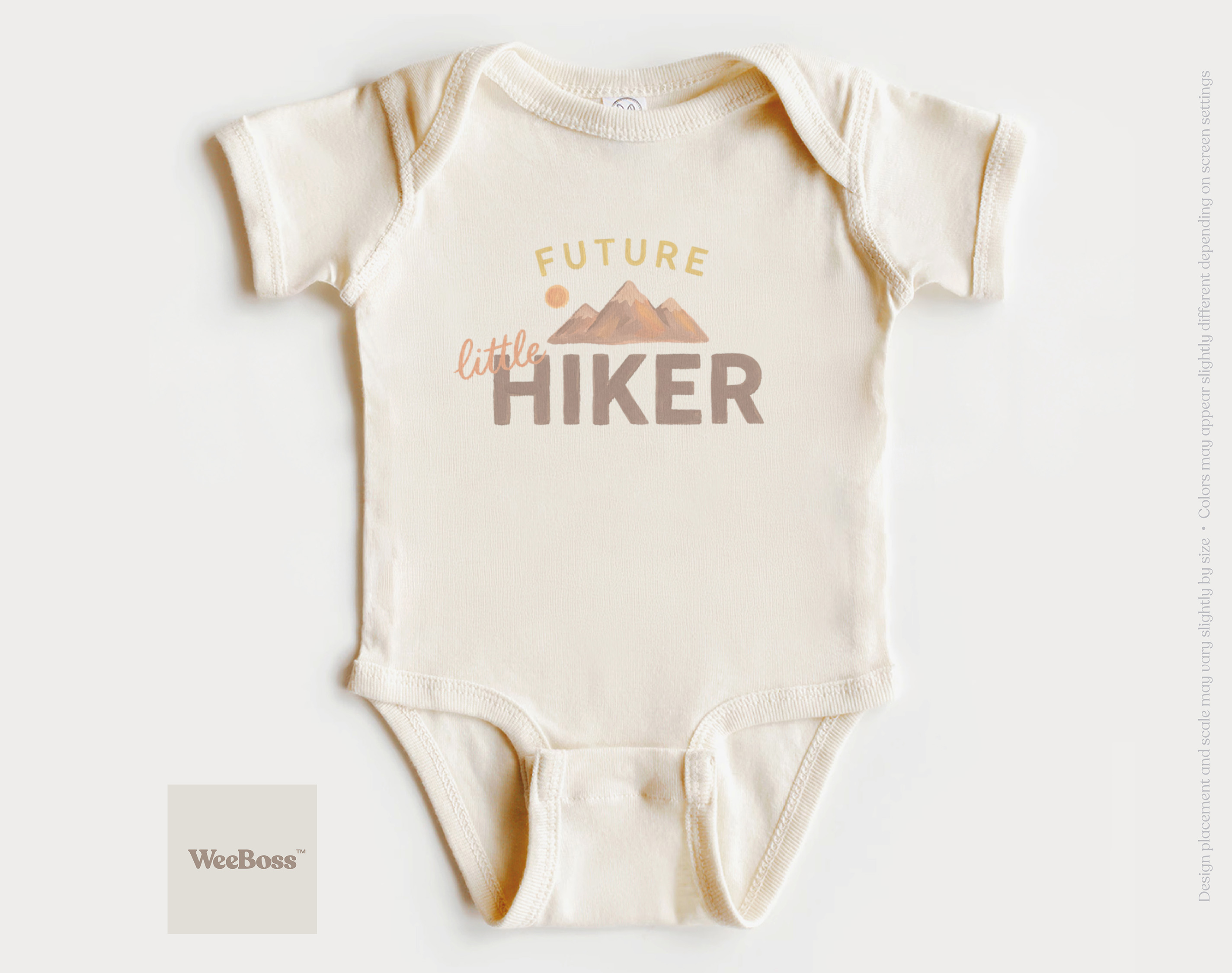
Subtle references to family personality. Humor that is specific to this household — the one that actually runs on Sunday waffles, or the one where everyone hikes, or the one where dad makes the same pun in three different contexts — feels chosen in a way that a novelty shelf piece never does. These are the funny pieces that feel like gifts and not purchases.
Minimalist wit. One word. One clean phrase. No graphic. The humor comes entirely from the phrase and the context (a very small person wearing it). “Unsolicited opinions welcome.” “Still figuring it out.” “Already over it.” When these are done with good materials and clean execution, the lack of additional design is the design.
A Short List of Humor Approaches That Do Not Age Well.
These are not rules. They are patterns that come up enough that they are worth naming before you buy.
Avoid jokes about the baby not sleeping and the parents suffering. One piece with dry wit about sleep deprivation is funny. Three pieces in this lane become a complaint. And when the baby is three and actually sleeping, the whole category has dated.
Avoid text-plus-graphic combinations. If the phrase is strong, the graphic weakens it. If the phrase is weak, the graphic is compensating. The combination rarely improves either.
Avoid anything with more than two colors. A funny phrase in a single color, on cream or natural fabric, is almost always cleaner and better-executed than a multi-color graphic treatment. The restraint communicates intent.
Avoid novelty-site aesthetics. You can usually tell the category by the product photo: white background, product against blank space, clip-art graphic, three-word phrase in a blocky font. These are designed for search volume, not for family photos.
Avoid pieces where the baby is the butt of the joke. Humor that makes the baby look foolish, powerless, or ridiculous is different from humor that uses the baby as a vehicle for an accurate observation. The line is not always sharp, but it matters.
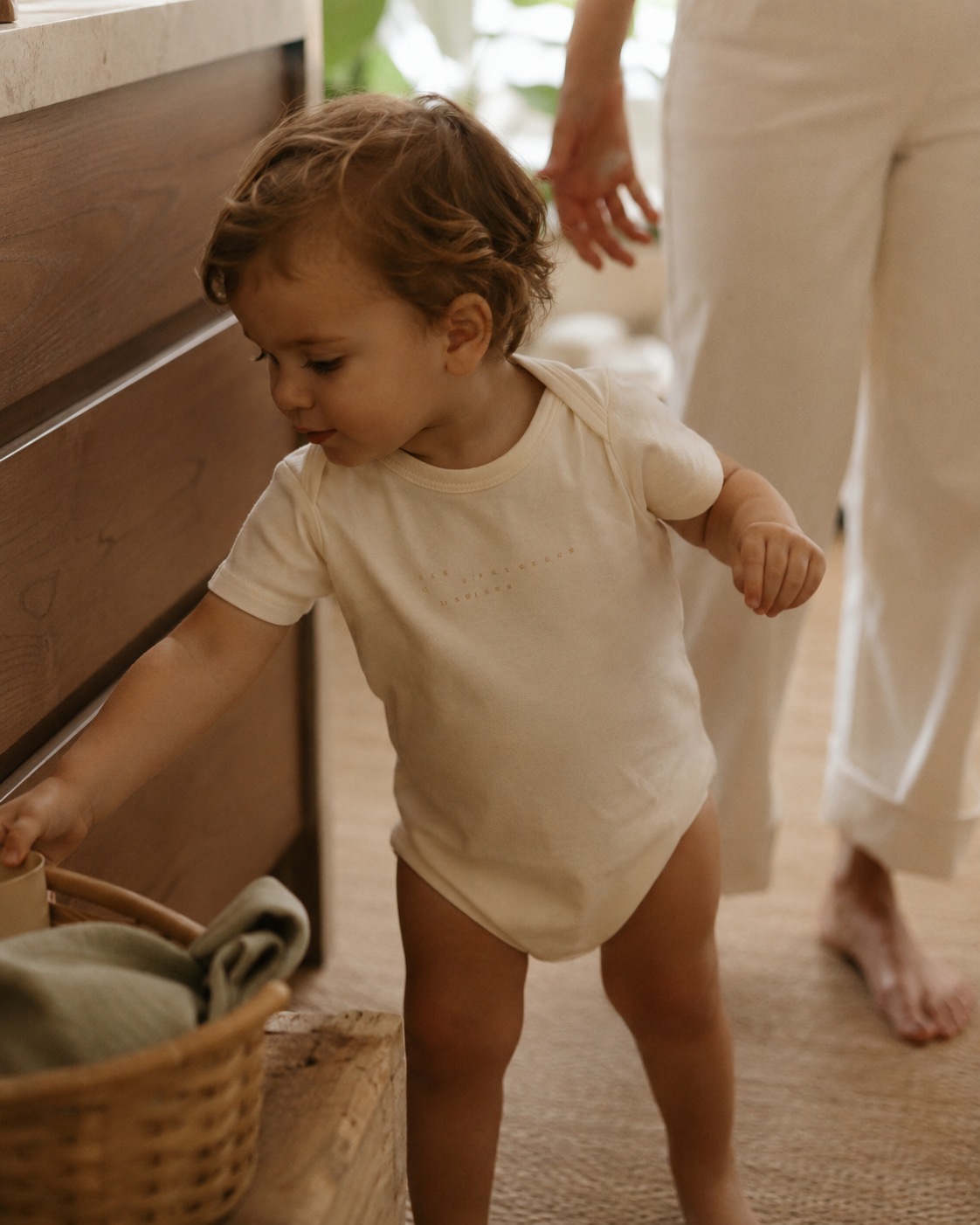
“The real test: would you leave this on all day, not just for the photo?”
Clothing that works for the photo but not for Tuesday morning is optimized for the wrong moment.
How to Choose Funny Baby Clothes Without Getting It Wrong.
Funny baby clothing is a reasonable baby shower gift category. It is also the one most likely to produce a politely received item that gets worn once and retired. Here is how to reduce that outcome.
Read the parents first. Not all parents want funny baby clothes, and that is a completely valid preference. Before buying in this category, confirm that the parents have a sense of humor about parenting and that they would actually put their kid in something with a phrase. This is easy to confirm from how they talk and what they post. If it is unclear, a practical gift is the right call.
Buy practical alongside funny, not instead of practical. A funny bodysuit is the one piece in the gift bag, not the whole gift bag. If the rest of the shower is all neutral, a well-chosen funny piece earns its place by contrast. If every gift is a novelty item, none of them land.
Buy in 3-6M. This is the most reusable size window for a baby shower gift. The funny piece needs enough time on the baby to actually be seen, photographed, and worn multiple times. A 0-3M size is often outgrown before anyone outside the immediate household sees it. Sizing up to 3-6M gives the piece more life. For a full breakdown of size logic for baby clothing gifts, what size baby clothes to buy as a gift covers the reasoning by occasion.
Choose the quieter version when in doubt. Between two pieces in the same humor lane — one loud, one restrained — the quieter piece is almost always the better gift. It asks less of the parents. It photographs without context. It works more days.
The photo test. Before finalizing, ask: would this look right in a casual family photo without explanation? If yes, buy it. If the image you are imagining requires the parents to be performing the joke alongside the baby, it may be a piece that works once but not repeatedly.
For a wider range of shower gift ideas beyond clothing, funny baby shower gifts that do not feel generic covers the full category. For gifts weighted toward the practical, baby shower gifts parents actually use is the better starting point.
Pieces Designed to Work Outside the Store, Not Just In It.
WeeBoss baby and toddler pieces start from a specific observation and stay there. The humor is not bolted on after the product is designed; it is the reason the product exists.
“Snacks for Dinner” is not a joke about feeding a baby. It is an identity statement for a very small person who has already decided what their priorities are and has communicated them without ambiguity. It works because most families already have a version of this kid — and because the phrase does not need a graphic or a secondary line to land.
The design choices reflect the same premise: one color, soft cream fabric, clean typography. The garment does not explain itself. It expects the person looking at it to already be in on the joke — which is usually how humor works when it actually functions.
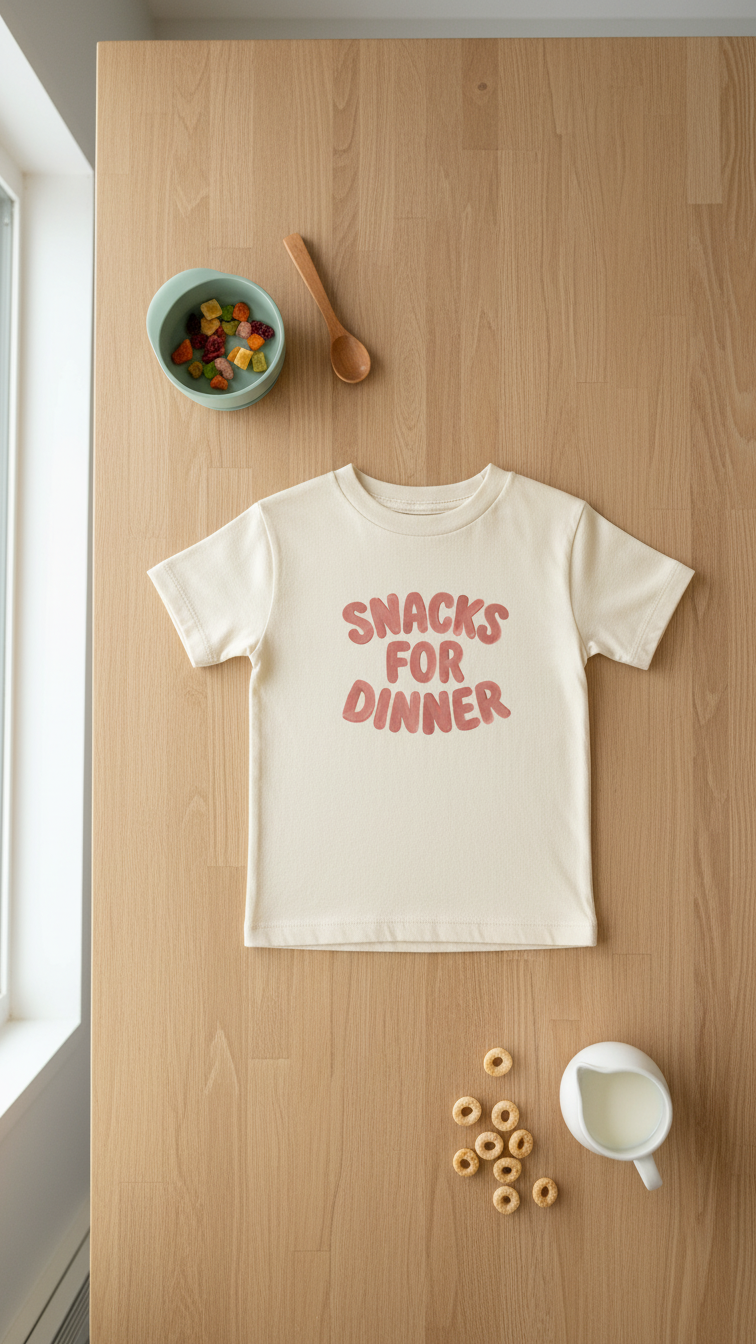
Snacks For Dinner
One phrase, one color, no explanations. For the household that has already been reorganized around snack time — and the very small person who made that call. Available in infant bodysuit and toddler tee.
View on Etsy →
WeeBoss pieces fit the category of funny baby clothes that work as baby shower gifts when the goal is something memorable rather than something expected. For gift givers who want humor without the novelty store associations — for parents who would actually put the piece in the photo — this is the lane.
For more on WeeBoss and what the pieces are designed around, gifts for new parents has context on how the brand fits alongside other practical gifting decisions.
More on Baby Clothing and Gifts.
If this article helped clarify the humor question but left other decisions open, these cover the rest:
- Funny Baby Shower Gifts That Don’t Feel Generic — a full baby shower gift guide with humor as a thread, not the whole category
- Baby Bodysuit vs Romper: Which Makes the Better Gift? — the garment decision behind the humor piece you are considering
- What Size Baby Clothes to Buy as a Gift — sizing logic for baby shower gifts, by occasion
- Baby Shower Gifts Parents Actually Use — the practical category, for when funny is a secondary priority
- Gifts for New Parents — the broader gift context beyond clothing
A Short Answer If You Are Still Deciding.
Funny baby clothes work when:
- The joke starts from a real observation, not a template.
- The design trusts the reader — one phrase, clean typography, no explanation needed.
- The material is soft enough that the garment is worth wearing past the first laugh.
- It would look right in a photo without context.
- It remains accurate beyond the first season.
They do not work when:
- The humor is designed for the purchase moment, not the wear.
- The design adds graphics, multiple colors, or a font that tries too hard.
- The joke is about a specific parenting complaint that ages quickly.
- The phrase would only land on a novelty website, not in a real family photo.
The difference is almost never about how funny the phrase is in isolation. It is about whether the piece was designed to be worn — or just to be noticed.