What Babies Actually Wear in the First 3 Months
An honest guide to newborn clothing — what gets used constantly, what to skip, and exactly how many pieces you need.
Here is the honest answer: in the first three months, babies wear the same four things in rotation.
A zip-up sleeper. A plain bodysuit. A swaddle. Possibly a hat. That is almost entirely it.
This is not a failure of planning. It is the actual reality of newborn life — a cycle of feeding, changing, and putting back down that repeats every few hours, around the clock. The wardrobe that serves this reality is small, soft, and designed around one-handed snap access at 3am.
The good news is that this means you can buy a small, excellent wardrobe instead of a large mediocre one. You need fewer things than most baby registries suggest, better chosen.
This Is What They Actually Wear.
Before the categories: if you want one honest paragraph, here it is.
The first three months of a baby’s life are organized almost entirely around feeding, sleeping, and diaper changes. Everything a baby wears exists to make those things easier. The clothes that serve this best are: zip-up sleepers (fastest to get on and off), plain short-sleeve bodysuits (base layer for everything), long-sleeve bodysuits (for cooler days and layering), swaddle blankets (for that critical first sleep phase), and socks. That covers 90% of the rotation.
The remaining 10% is one or two special outfits — worn for a newborn photo, a first visitor, a christening, a holiday. They matter. They just do not drive wardrobe decisions.
Everything else — tiny jeans, layered sets, shoes, themed seasonal outfits — is either rarely worn, worn once, or worn for approximately twelve minutes before a diaper change made it impractical.
The Core Wardrobe.
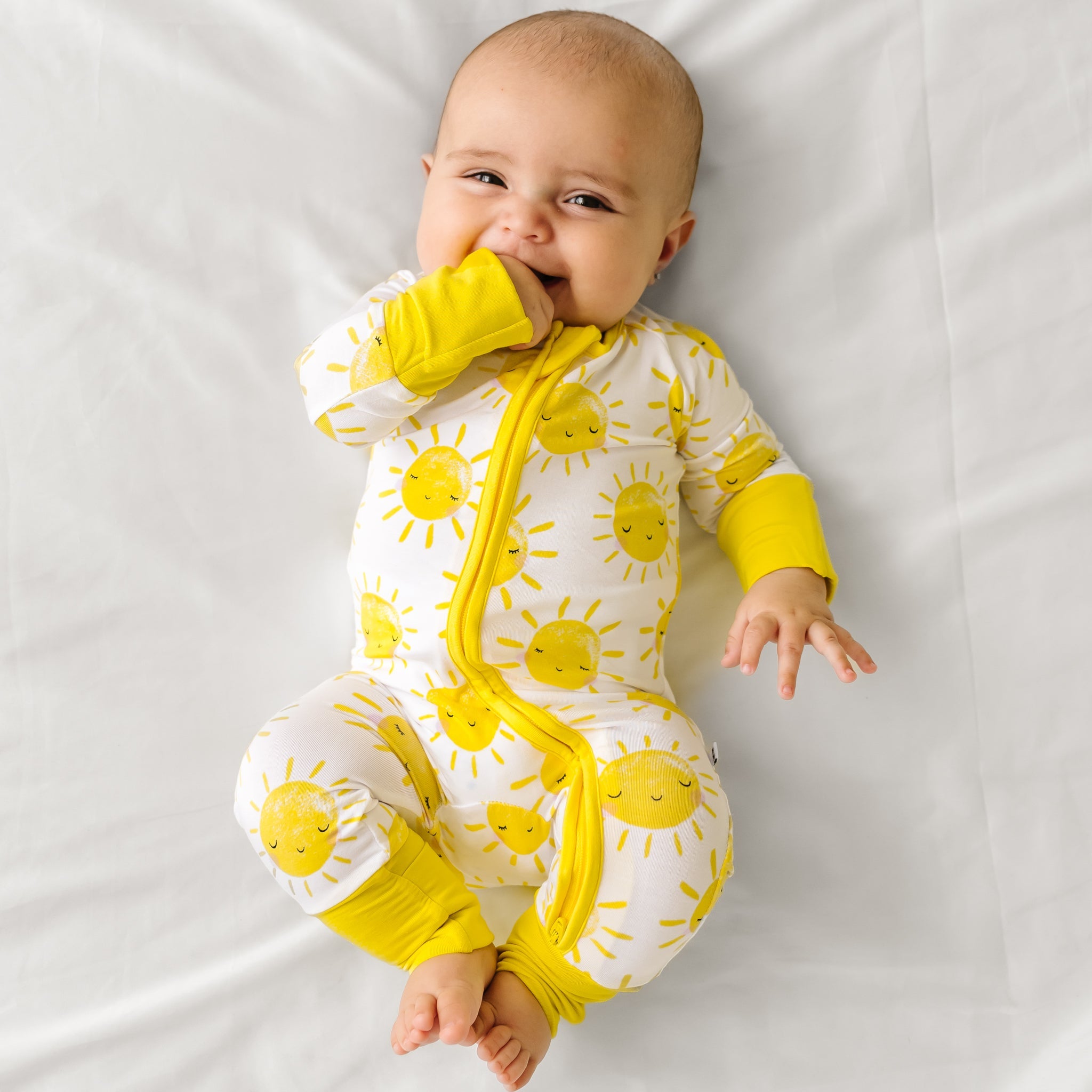
Zip-up sleepers are the single most-used garment in a newborn’s wardrobe. The zip runs from the foot up — meaning you can change a diaper without fully undressing a sleeping baby, which at 3am is not a convenience but a lifeline. Look for a zip that starts at the bottom. Cotton or bamboo viscose. Nothing with a back zip. Carter’s, Little Sleepies, and Hanna Andersson all make reliable versions.
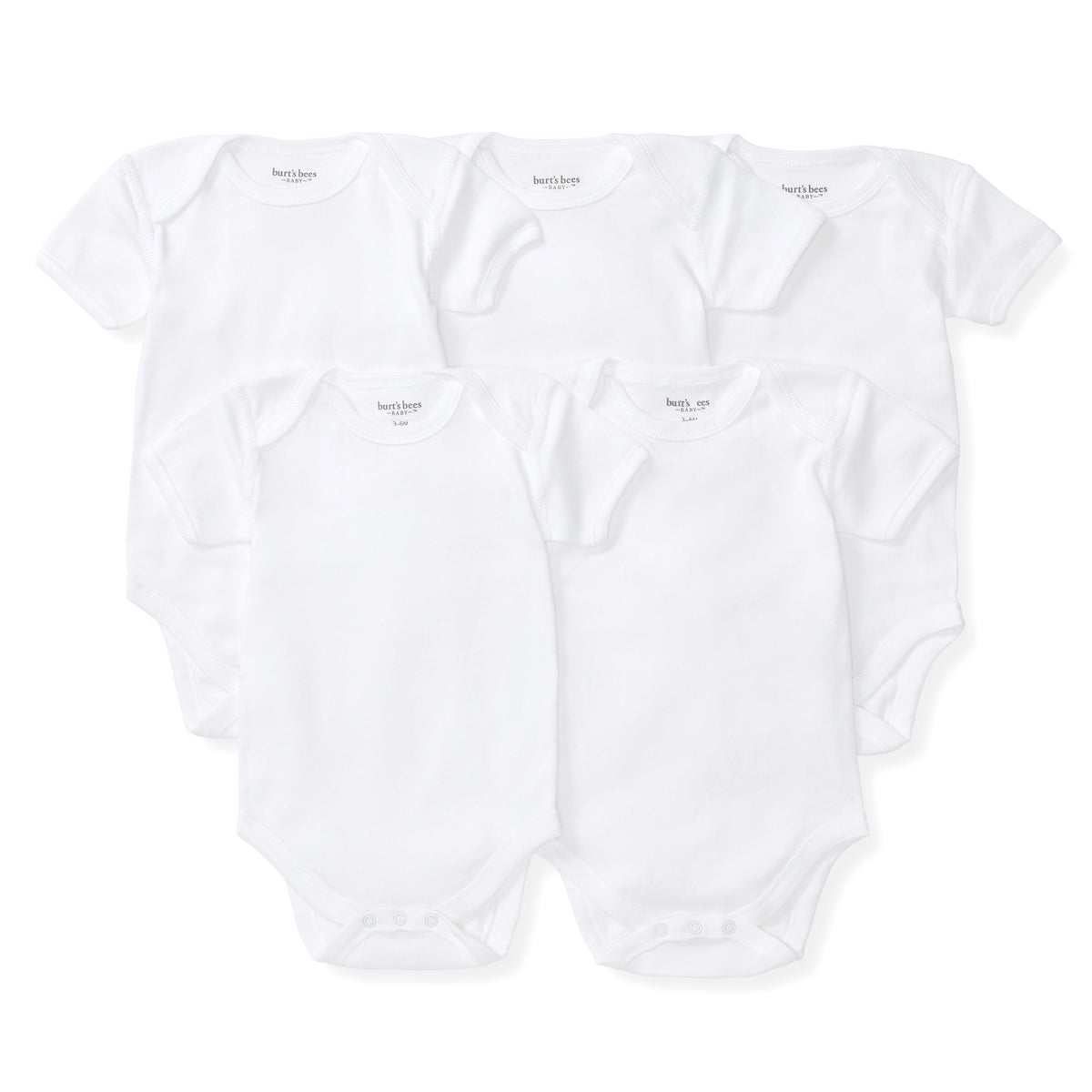
Short-sleeve bodysuits are the foundation of the rotation. They snap at the crotch, stay tucked, and work alone in warm weather or as a base layer in cool weather. Buy them in multipacks — you will use 2–3 per day during the first weeks. The expandable envelope neckline (the folds at the shoulders) matters: it lets you pull the bodysuit down the body if there is a blowout, rather than over the baby’s head.
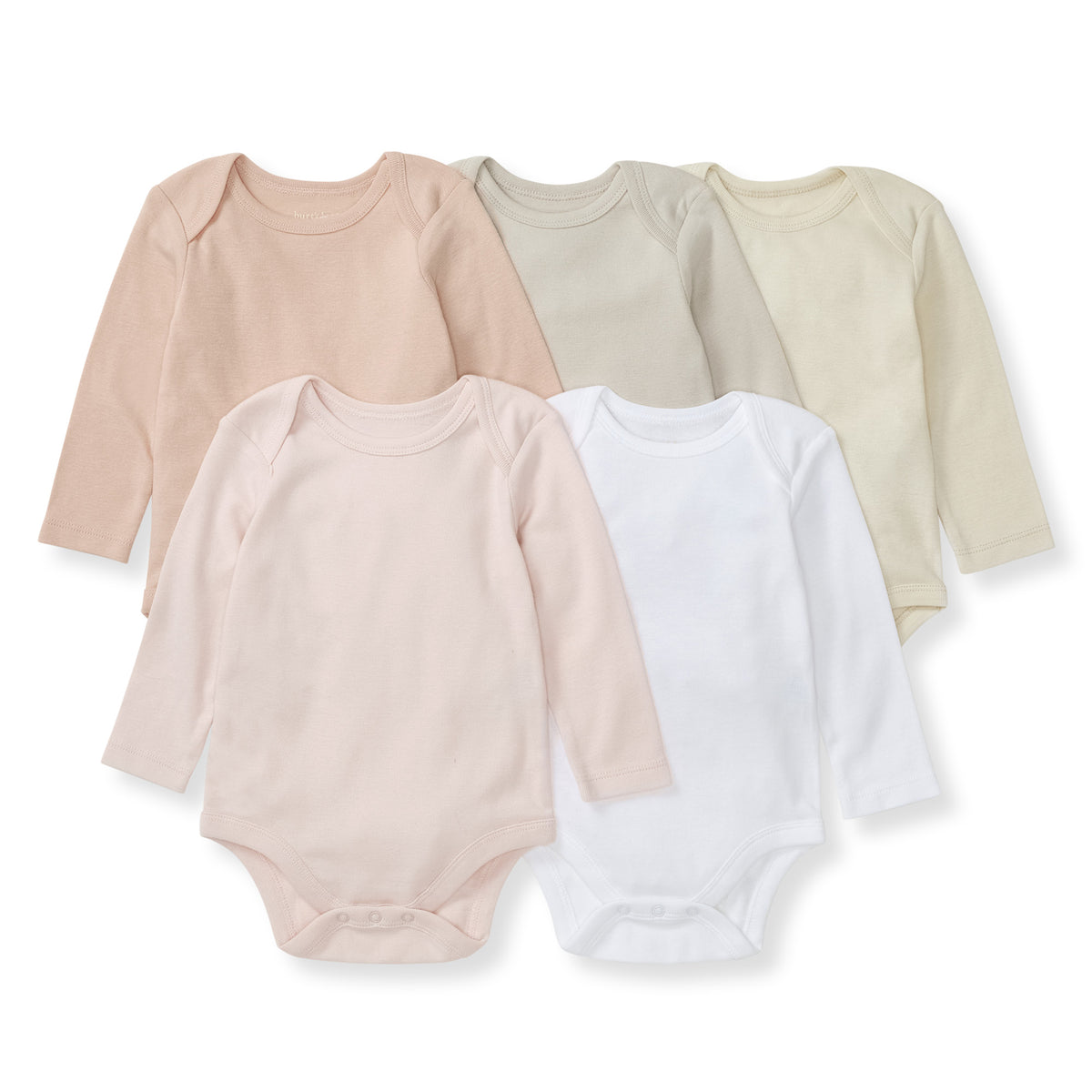
Long-sleeve bodysuits do the same job in cooler temperatures. Layer one under a sleeper for winter warmth, wear alone on mild days, or pair with soft pants when you want something slightly more dressed without the effort of an actual outfit. Gerber, Primary, and Burt’s Bees Baby all make simple versions worth stocking.
Swaddle blankets and sleep sacks are not exactly clothing, but they are what a baby wears for the first few months of sleep, which is most of their life. A good swaddle blanket (muslin, breathable, generous size) wraps a newborn snugly and mimics the feeling of the womb. A sleep sack replaces loose blankets once the baby starts moving — it keeps them warm without the safety risks of a loose blanket in a crib. Both are non-negotiable.
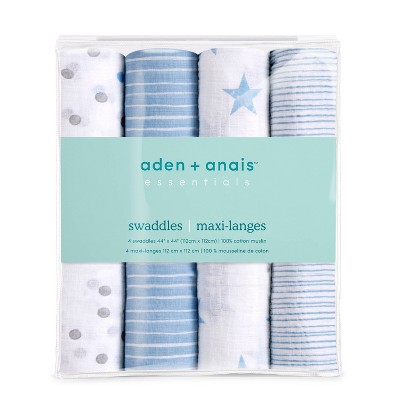
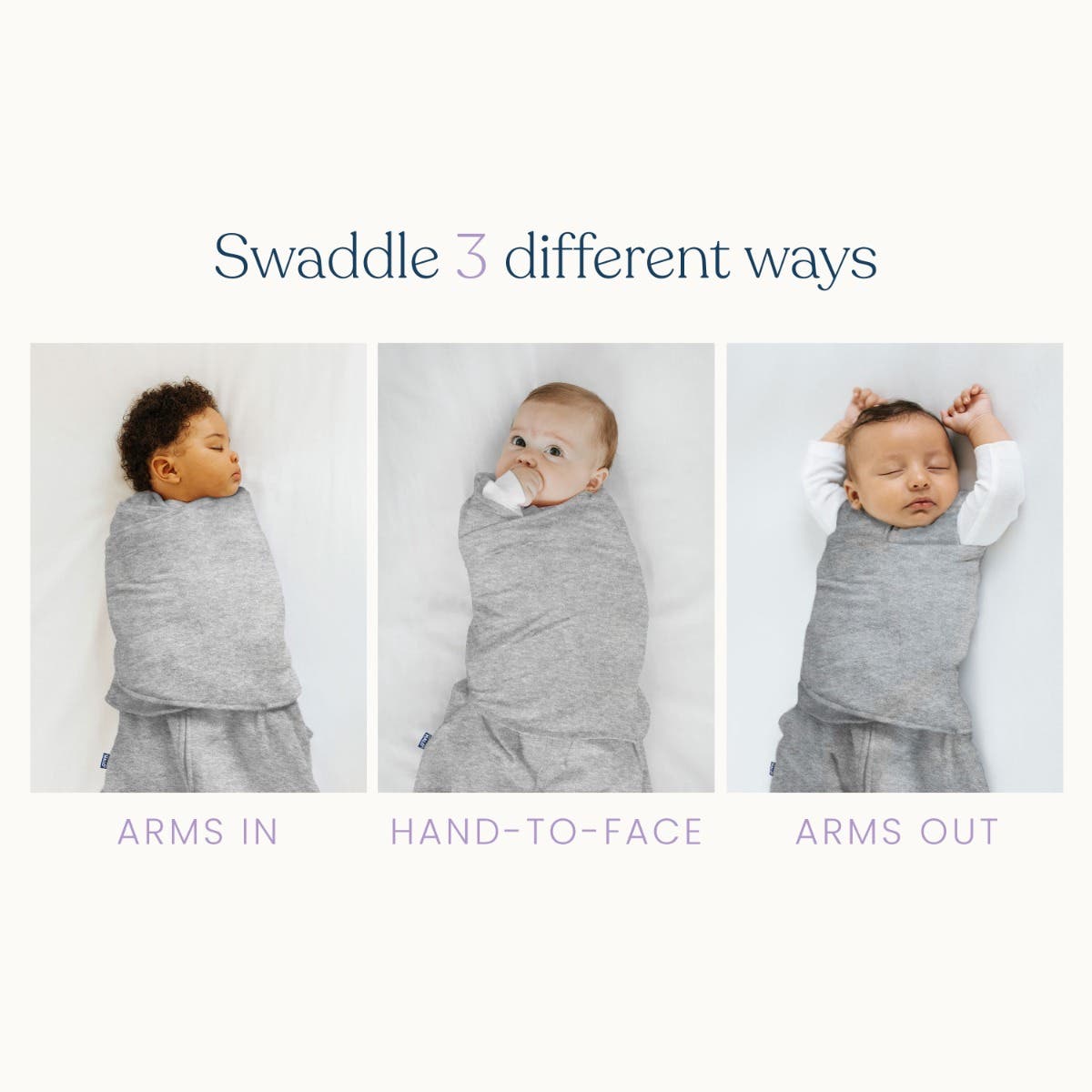
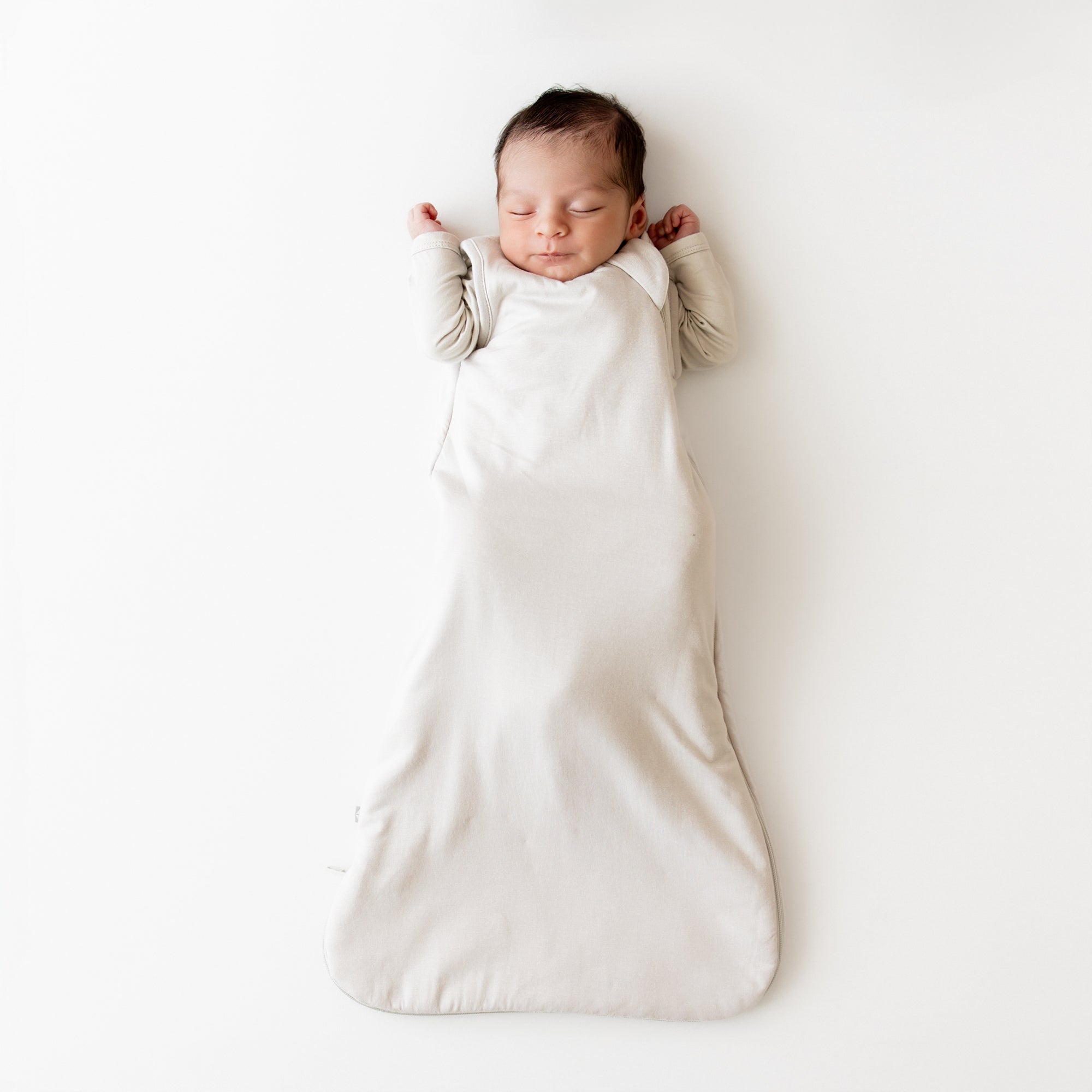
Socks. Every baby needs 8–10 pairs. You will lose roughly half. The losses are unexplained. Accept this early and buy extra.
Hats are mainly for the first few days and for cold outdoor weather. Hospitals put a hat on a newborn immediately after birth — that is appropriate, since newborns cannot regulate temperature yet. At home, a cotton or bamboo hat is useful for winter outdoor trips. Most of the time, indoors and at normal room temperature, a hat is not needed.
“You need fewer things than most baby registries suggest, better chosen.”
What You Can Skip.
This section will save you money and storage space.
Tiny jeans. Every baby has tiny jeans. Most baby jeans get worn once, if that. Denim is stiff, uncomfortable on a baby who has no functional waist yet, and requires a real diaper change effort every single time. They are cute in photos and genuinely impractical everywhere else.
Outfits with buttons on the back. There is no reason for this to exist. If you receive one as a gift, smile warmly and store it.
Complicated layered sets. The three-piece sets with a onesie, pants, and a little jacket look wonderful in product photos and in reality take six minutes to put on a baby who will immediately need a diaper change. Save yourself.
Shoes. Babies do not walk. Shoes serve no functional purpose in the first three months. Soft non-slip booties are fine for outdoor cold weather trips. Stiff shoes are not needed and often fall off immediately.
Newborn-sized clothes. This is the most expensive mistake on baby registries. Many babies are born larger than newborn size and skip it entirely. Most of the ones who fit in newborn clothes outgrow them in two to three weeks. Buy a small number of newborn items — six to eight bodysuits or sleepers — and invest the rest in 0–3 months and 3–6 months sizes, which actually get worn.
Formal or seasonal outfits in large quantities. One holiday outfit is correct. Four is a collection that will be partially outgrown before you get to them.
The Quantity Guide.
This is the table most parents wish they had before buying anything. These ranges assume you are doing laundry every 3–4 days.
| Item | How many | Notes |
|---|---|---|
| Zip-up sleepers | 4–6 | More if winter baby; fewer if summer |
| Short-sleeve bodysuits | 6–8 | The most-used item you own |
| Long-sleeve bodysuits | 4–6 | Layer under sleepers in cold weather |
| Footed pajamas | 3–4 | Optional if you have enough sleepers |
| Swaddle blankets | 4–6 | They get spit-up on them. Often. |
| Sleep sacks | 2–3 | Once the swaddle phase ends |
| Socks | 8–10 pairs | Budget for the ones that vanish |
| Cotton hats | 2–3 | Hospital days + outdoor cold |
| ”Special” outfits | 1–2 | Genuinely enough |
A few things worth noting here. Short-sleeve bodysuits are the item most parents underestimate — 6 sounds like a lot until you have used three in a single morning. Swaddle blankets get spit-up on them, which means they rotate faster than expected. And one to two special outfits is genuinely the right number — not because the baby won’t be adorable in more of them, but because they grow fast and the window to use any single item is shorter than it looks in the shop.
If you are buying for a gift, buy one size up from what everyone else will buy. Most people buy newborn size. Buy 0–3 months or 3–6 months instead.
Summer vs. Winter Babies.
Summer babies need lighter everything. Short-sleeve bodysuits alone work well indoors in warm weather — no pants, no layers required. Choose breathable fabrics: 100% cotton, muslin, or bamboo. Add a lightweight sun hat (with a wide brim) for outdoor time. For sleep, a muslin sleep sack or a thin cotton swaddle is enough most nights.
Winter babies need layers, not bulk. The standard approach: a long-sleeve bodysuit as a base layer, a zip-up sleeper on top, and a sleep sack for warmth in the crib. For the stroller or car, add a blanket over the buckled harness — do not put the baby in a puffy coat inside the car seat, where it compresses in a crash and the harness no longer fits correctly. Use an infant car seat cover or a blanket draped over the outside of the straps instead.
Seasonal outfits look cute in both directions. The summer baby in a swimsuit and the winter baby in a Christmas sleeper are both genuinely delightful. One of each is enough.
The Gift-Giver's Guide.
If you are shopping for someone else’s new baby, here is what actually helps:
Buy one size up. Most people buy newborn. The baby outgrows it in three weeks, sometimes before it gets washed. 0–3 months, 3–6 months, or even 6–12 months are more useful; if you want the full gift-giver version, use this guide to choosing the right baby clothing size.
Choose soft fabric over cute print. If the fabric is stiff, scratchy, or anything other than soft cotton or bamboo, it will not be worn. Softness matters more than the pattern.
Easy closure wins. Zip or snap at the crotch. Avoid anything with buttons only on the back, ties, or complicated layering systems.
One piece with personality — something specific, something the parents won’t buy themselves. The wardrobe is mostly neutral basics. A personality piece is what gets remembered.
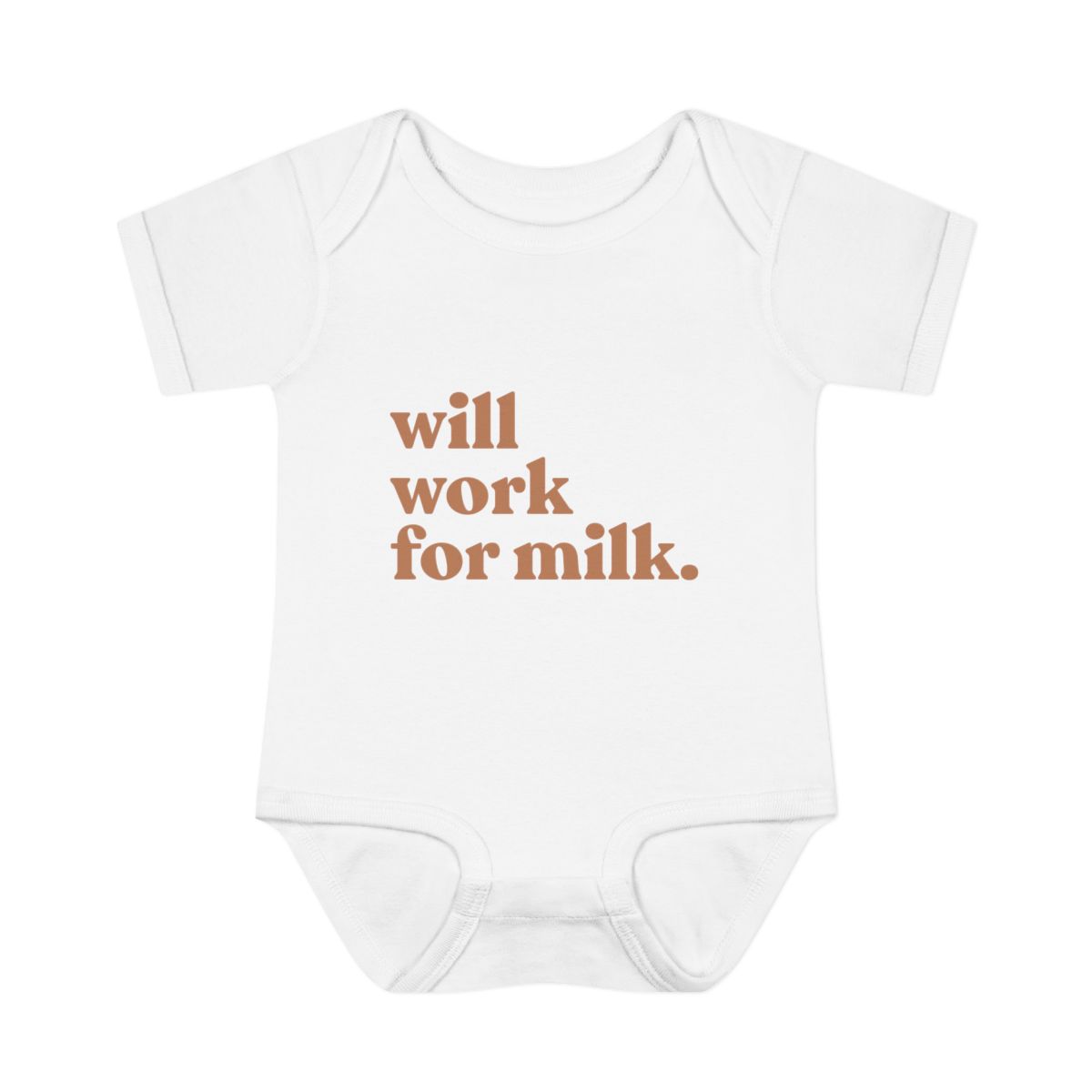
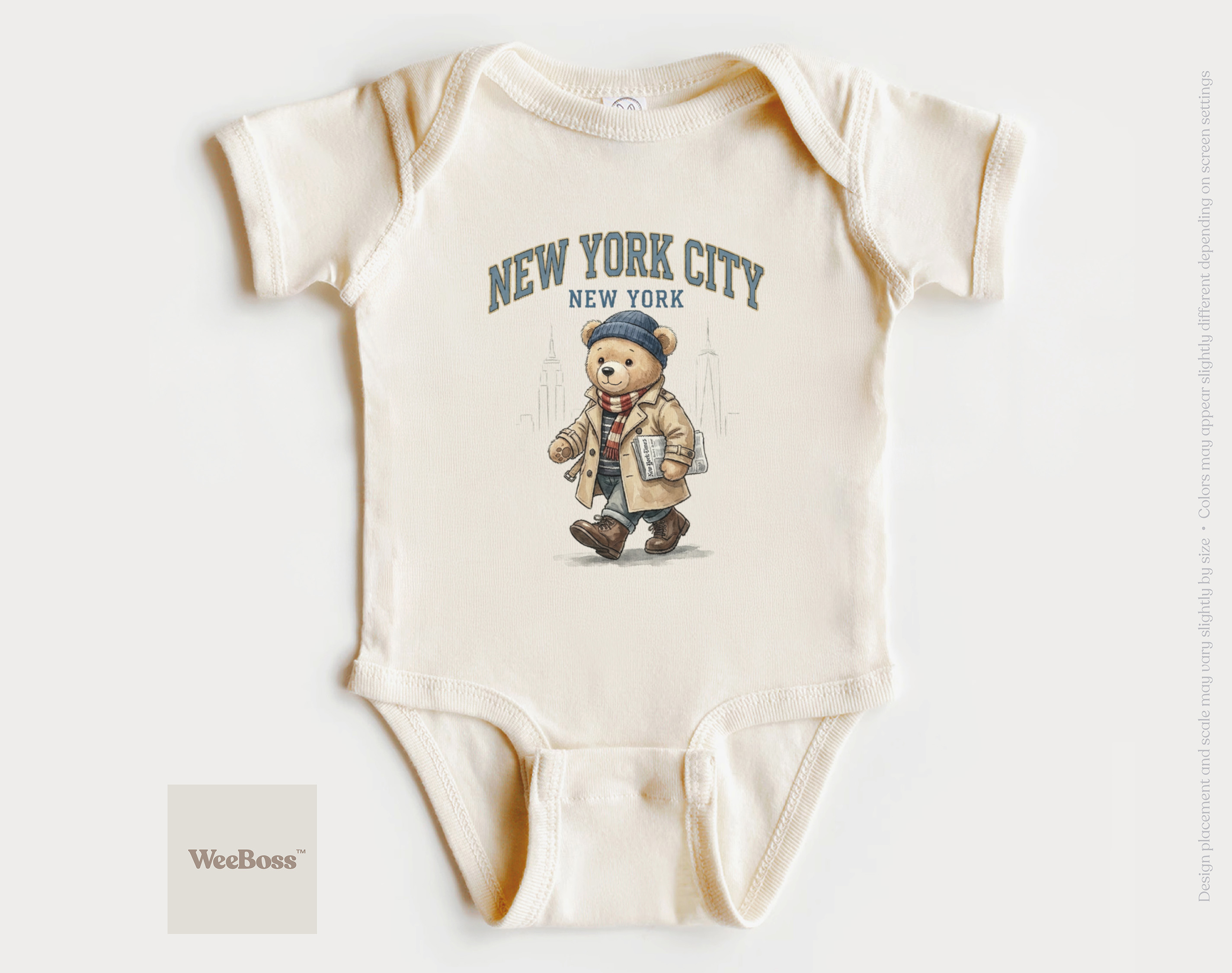
Will Work For Milk
A baby bodysuit for the one whose entire life currently revolves around exactly one thing. The punchline is immediate. The fabric is soft. And it comes in infant sizes, which means it actually fits the first three months — the exact window the rest of this article describes. Buy it one size up from newborn, and it becomes the photo outfit for the first visitor.
View on Etsy →
“A small, soft, practical wardrobe
is genuinely better than a large one.”
The cute outfit moment will come — at month two, at month four, at the holiday photos. For now, get the sleepers right.
The Part Nobody Mentions.
In the first weeks, a baby goes through two to three outfits per day. Sometimes more. This is not a problem to be solved — it is just the pace.
A few things that help:
Wash everything before wearing it. New baby clothes have fabric finishes and dyes that are not there by accident. A single wash in fragrance-free, dye-free detergent is enough. Get in the habit of pre-washing as things arrive rather than all at once before the baby comes.
Pre-treat stains immediately. A splash of water and a bit of stain spray before the item goes in the hamper is the entire strategy. The stain that soaks in for three days and sets is the one that doesn’t come out.
You will do laundry constantly regardless of how many clothes you own. More clothes does not mean less laundry — it means more days between loads. If you have six sleepers, you do laundry every three days. If you have twelve, you do it every six. Either is fine. The laundry is not going away.
Use a fragrance-free detergent for at least the first year. Baby skin is genuinely sensitive in the first months, and fragrance is the most common irritant. All Free & Clear, Seventh Generation Free & Clear, or any fragrance-free, dye-free option works. You do not need a special baby detergent — you just need to remove the fragrance.