Baby's First 4th of July: What to Pack, Wear, and Skip
A practical guide to the holiday — less about patriotic moments, more about heat, timing, spare outfits, and knowing when to leave.
The 4th of July with a baby looks different than you imagine. Not worse — just different.
You picture a backyard scene. Baby in a little patriotic outfit. Everyone relaxed and happy. A photo worth keeping.
What actually happens is that you spend most of the day managing heat, tracking nap windows, restocking the diaper bag, and negotiating with a tiny person who has strong opinions about being held in direct sunlight. The fireworks come at 9:30 PM. By then, someone is usually already asleep in the car.
That is fine. That is, in fact, a good first 4th of July.
This guide is about the logistics — what baby should wear, what to pack, what to leave home, and how to structure the day so it stays manageable.
Wear: Simple, Light, and Easy to Change.
The mistake is dressing baby for the photo rather than the day. A thick embroidered romper looks great in a flat lay. It also traps heat and requires completely undressing for every diaper change.
What actually works:
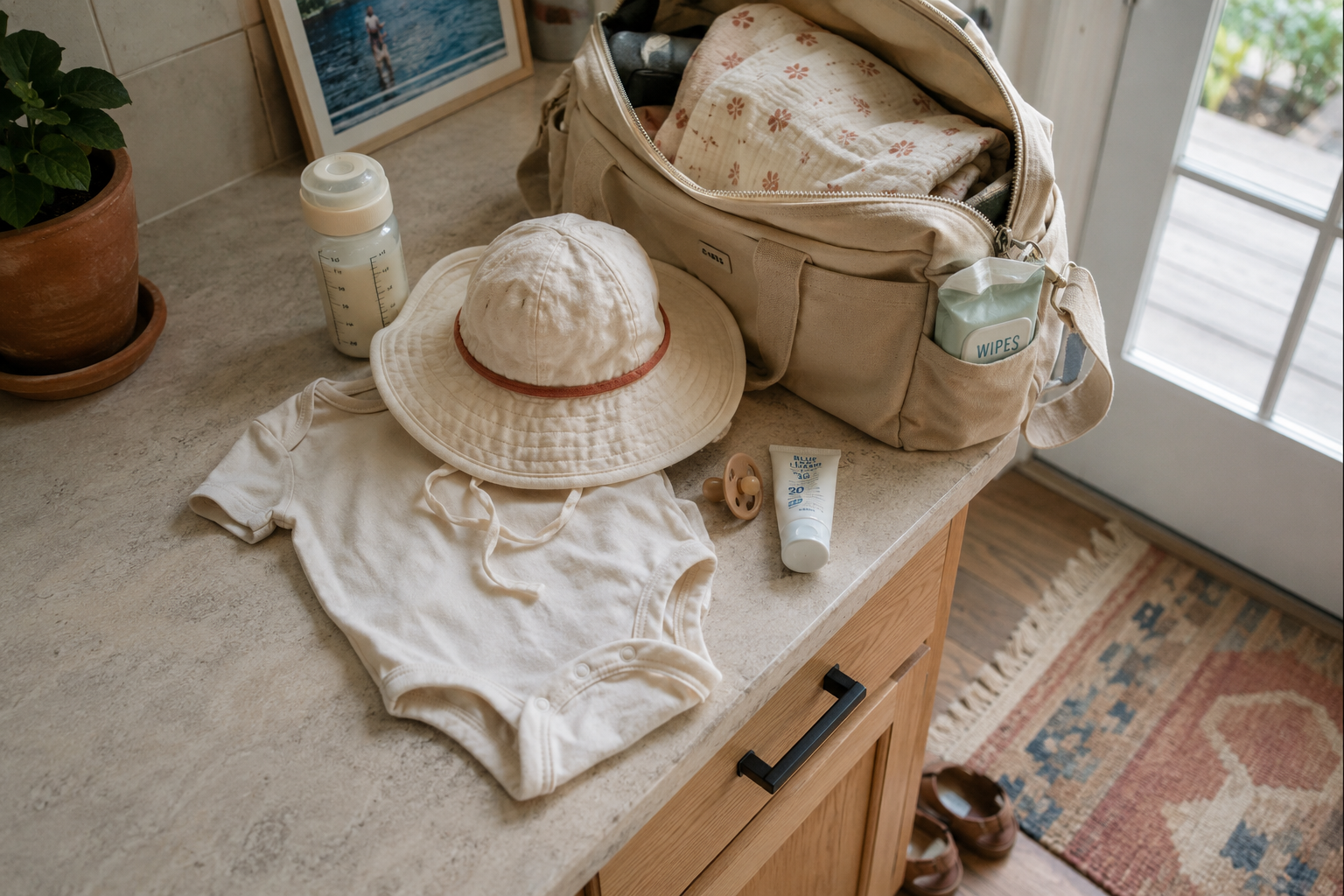
A lightweight short-sleeve or sleeveless bodysuit in breathable cotton jersey. Snap closures at the bottom — not buttons, not zippers that go from neck to ankle. You will change this outfit at least once. Snaps are faster when you’re on a blanket in the grass.
On color: lighter colors reflect heat better than dark ones. This isn’t a style note — it’s practical. A pale or white bodysuit with a small detail is more comfortable in July sun than a dark printed onesie.
A wide-brim hat is not optional. It shades the face, ears, and back of the neck — all areas that burn and overheat quickly. It will come off constantly. Put it back on constantly. This is the job.
Footwear: none, or soft socks if evenings are cool. Shoes are not useful for a baby who isn’t walking, and they always come off anyway.
For the evening: temperatures drop, mosquitoes arrive. A thin zip-up or light cotton layer in the bag — not on baby at noon — covers both situations.
One full spare outfit minimum. Two if you’re staying all day.
If you’re still deciding what baby wears, 4th of July Baby Outfits That Don’t Look Like a Costume covers what to look for and what to skip when choosing the actual garment.
Pack: The Practical Bag.
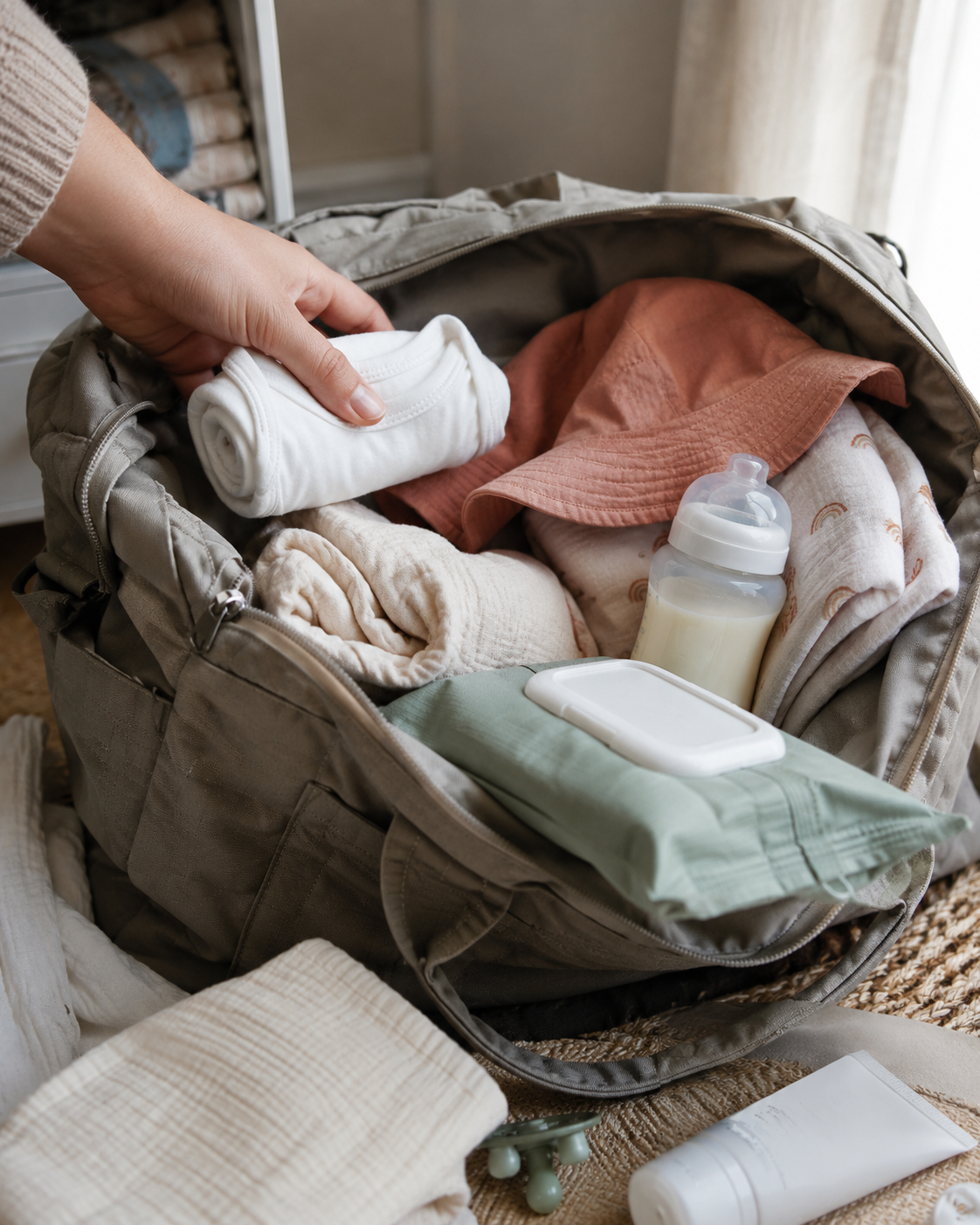
Build the diaper bag around three priorities: shade, feeding, and fast changes.
Shade and cooling:
A portable beach tent or canopy gives baby a dedicated shade zone — this matters more than anything else on the list. A clip fan on the stroller handles the in-between moments. The muslin blanket drapes over the stroller canopy to block side light and does double duty for everything else.
Feeding:
More than you think you need. Heat increases fluid needs for everyone, including babies. If formula-feeding, pre-portion formula before leaving — mixing in a hot, crowded environment is unnecessarily difficult. Nursing supplies, covers, or extra pumped milk if needed.
Diaper kit:
Four to six diapers for a full day, more wipes than usual, a portable changing pad (venue surfaces won’t be clean), and a few small trash bags. The trash bags are the thing people forget and then regret.
Comfort and sleep:
White noise on your phone — genuinely useful when baby needs to nap in a loud environment. Pacifier plus backup. A small lovey or familiar comfort item if your baby has one.
For you:
Water. More than feels necessary. Your own sunscreen — you’ll forget it if you only pack baby’s. A carrier or wrap, which lets you move around freely while keeping baby shaded and close.
One thing you don’t need: everything. Every item in the bag should have a specific job on this specific day.
Skip: The Things That Sound Good But Aren't.
The coordinated matching set that requires pulling over the head to change. Save it for a cooler day and a shorter outing.
Large baby gear — exersaucers, bouncers, activity mats. You’ll spend the whole event relocating them. A blanket on the ground works fine.
Novelty items that make noise. You’re going somewhere that already makes a lot of noise. There’s no need to add to it.
The all-day plan. Babies do better with short, contained outings than nine-hour events. Two hours at a family gathering followed by a nap, then a return for the evening, is usually more manageable than staying from noon through fireworks without a break.
The idea that you’ll definitely make it to the fireworks. You might. Build the day so that leaving before they start is an equally valid outcome, not a failure. The exit plan is the plan, not the fallback.
Managing the Heat.
Babies regulate body temperature less efficiently than adults and cannot tell you when they’re overheating. This is the main reason the 4th of July requires more active management than most outings.
Signs of overheating: flushed or red skin, rapid or labored breathing, excessive fussiness, clammy skin, or a baby who suddenly stops being interested in feeding. If you notice these, move to shade or air conditioning and offer fluids promptly.
Prevention is simpler than response:
Stay in shade as much as possible, especially between 10 AM and 3 PM when heat peaks. Check the inside of the stroller regularly — it can be meaningfully hotter than ambient air even with a canopy. Keep a clip fan running. Check baby’s neck and back every fifteen minutes or so — damp skin means they’re working hard to stay cool.
For babies under 6 months, sunscreen is generally not recommended — shade is the option. For babies 6 months and up, baby-safe mineral sunscreen on exposed skin. Apply before going outside, not after.
None of this requires anxiety. It requires a fifteen-second check every little while.
A Realistic Note on Fireworks.
Fireworks are very loud — the kind of loud that is unpleasant for adults at close range, let alone for an infant.
If you’re planning to watch:
Distance is the most useful variable. Viewing from farther away — a hill, a rooftop, a parking structure, a friend’s backyard down the street from the launch point — is noticeably quieter than being near the source. This is often the difference between a manageable experience and one that upsets everyone.
Some parents use infant ear muffs or noise-reducing ear protection. Whether you choose to is a judgment call. It may reduce distress; it can’t hurt. If baby is calm, keep watching. If baby is distressed, leave — no fireworks display is worth sustained distress for either of you.
An indoor or partial-indoor viewing option — a screened porch, a car with the windows cracked, a doorway — is a completely reasonable choice and still counts as watching.
The alternative is also fine: watch a smaller neighborhood display from down the block, or skip fireworks entirely and let baby go to bed on time. The first 4th of July is about being together, not about the specific spectacle. Baby will not remember. You will.
Timing the Day.
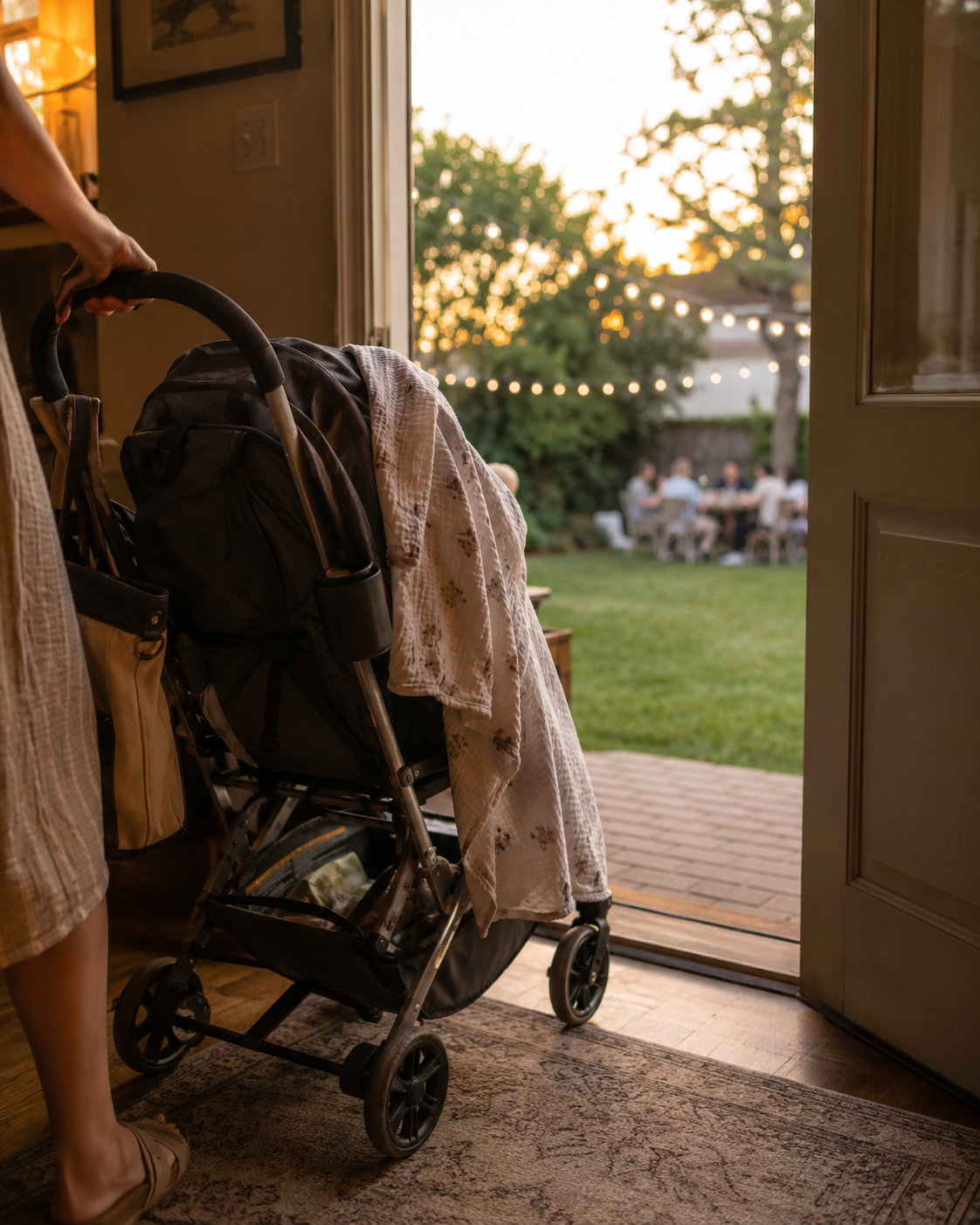
The biggest source of difficulty on the 4th of July with a baby is usually schedule disruption — not the crowd, not the heat, not the noise. The schedule.
Naps come first. Structure the outing around sleep windows, not the other way around. A rested baby at a summer gathering is genuinely manageable. An overtired baby is not, and no amount of good logistics recovers the second half of the day once that happens.
If the timing works, aim to arrive after a morning nap and leave before the next sleep window closes. This usually means late morning arrival and early-to-mid afternoon departure — before the heat peaks and before the evening exhaustion sets in. Then, if you want to return for fireworks, you’ve both rested.
Feedings on schedule matter more than usual when it’s hot. Heat can affect appetite, but pushing feedings significantly off schedule creates compounding problems. Don’t let a busy social environment make you wait too long.
Signs it’s time to leave:
- Baby is clearly tired and won’t settle with usual soothing
- Baby has been in heat for longer than is comfortable and it’s showing
- You’re past the point of both of you enjoying it
You don’t need a reason more specific than this. Leaving is not failure — it’s reading the situation correctly.
Getting the Photo Without Building the Day Around It.
The best photo from baby’s first 4th of July probably won’t be the one you planned.
If you want a deliberate shot — the outfit, the flag, the backyard moment — do it early. Before the heat sets in, before the nap window closes, before everyone is tired. Morning light is generally better anyway, and early baby is almost always a more cooperative subject than late-afternoon baby.
After that, let the phone be secondary. The candid moments — someone holding baby under a tree, a nap in the carrier, the first time baby notices something bright and loud — tend to be better photos than the posed ones. They’re also the memories that stick.
Make the day first. The photo follows from that, not the other way around.
Related Reading.
On the outfit itself: 4th of July Baby Outfits That Don’t Look Like a Costume covers how to find something festive that’s actually comfortable — and why most novelty 4th of July garments are designed for the purchase, not the day.
On what babies wear the rest of summer: What Babies Actually Wear in the First 3 Months is a practical breakdown of the actual core wardrobe — what gets used constantly, what to skip, and how many pieces you realistically need.