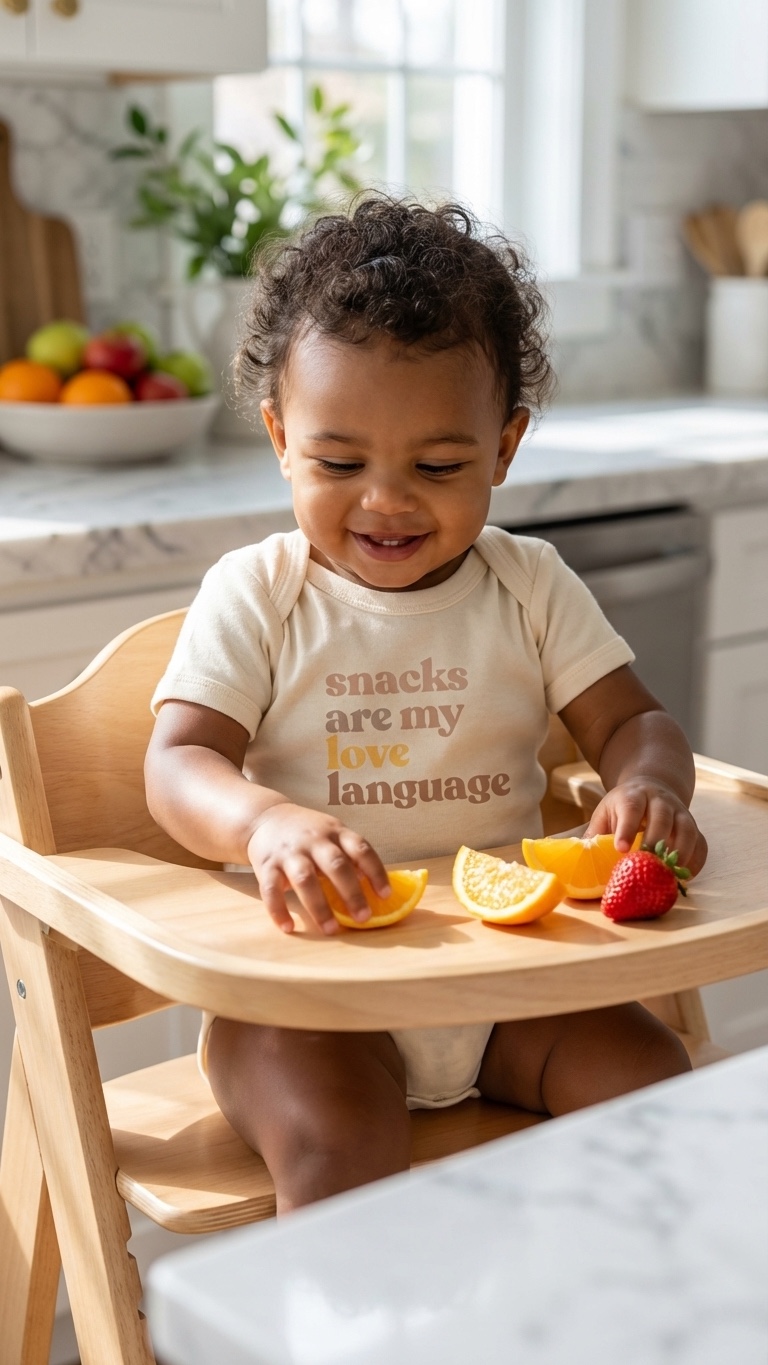
Toddler Clothes for Kids Who Have Opinions Now
When the baby becomes a person with preferences, the clothes need to keep up.
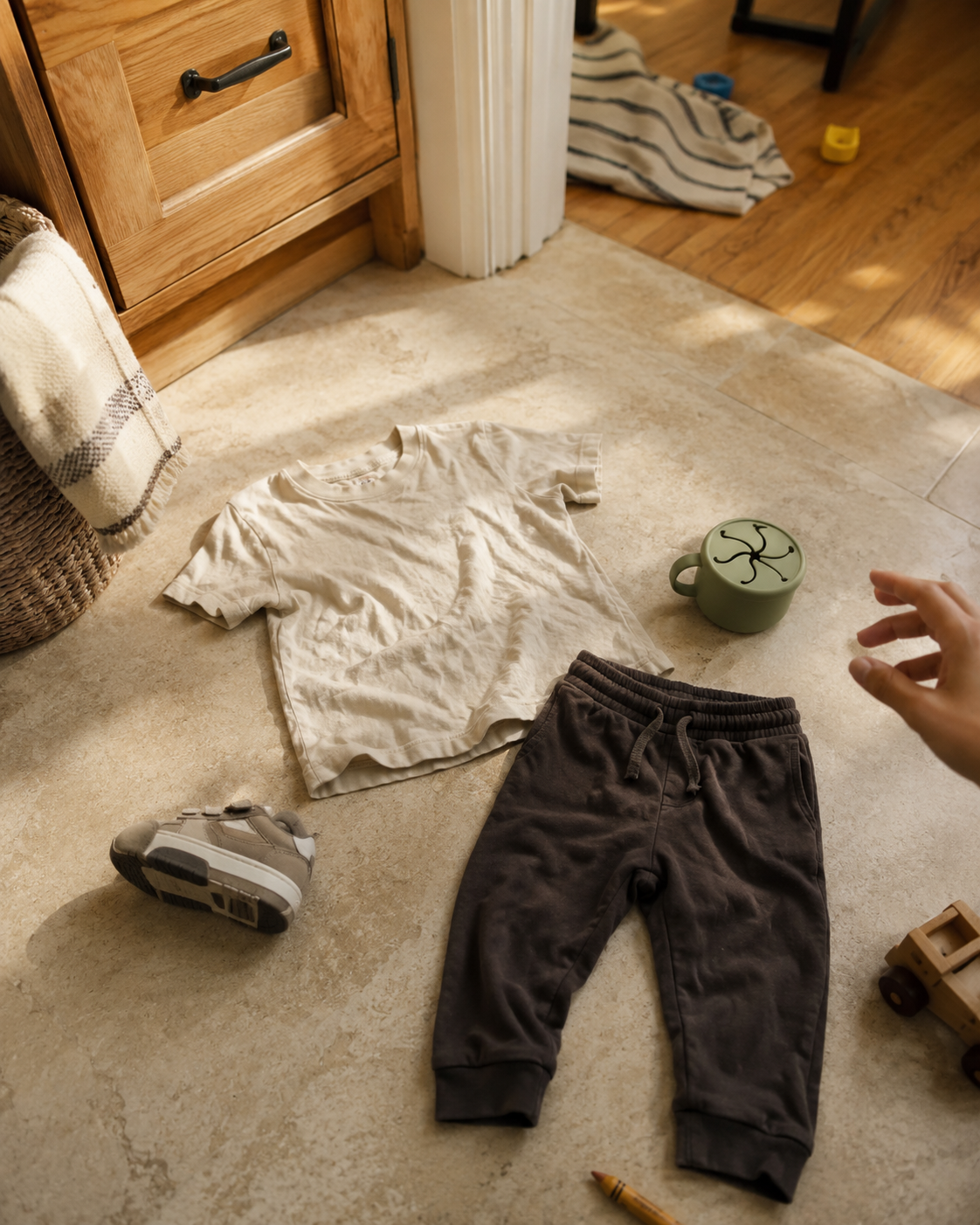
Somewhere between twelve months and two years, the baby becomes a person.
Not in the philosophical sense — though that too. In the logistical sense. The one where they have a preferred cup, a specific jacket they will and will not wear, a strong position on whether the shirt goes on before or after the pants, and opinions about socks that they cannot yet fully explain but will communicate at volume.
The clothes that worked for the first year stop working here. Not because of size, though obviously that too. They stop working because the job description changed. Baby clothes are for surviving infancy — warmth, accessibility, easy snaps for the fourth diaper change of the night. Toddler clothes are for surviving a person who is very busy, very determined, and covered in something from approximately 9am onward.
This guide is about that shift: what clothes actually survive toddlerhood, why the baby-clothes logic fails, and what to look for when you are buying for a two-year-old who already has a signature look.
What Toddler Clothes Actually Need to Do.
If you are in a hurry: choose soft, stretchy fabrics that survive daily washing. Choose silhouettes with room to move — no restrictive waistbands, no stiff collars, no elaborate closures that require patience from someone who has none. Size up from where they are, because toddlers grow at a pace that makes clothing feel like a subscription service. Choose at least one thing with personality, because the child has some and the clothes should keep up.
The short version: durable, washable, moveable, expressive without being theatrical. Everything else in this guide is an explanation of why.
The Logic of Baby Clothing Does Not Transfer.
Baby clothes are engineered around adult access. The snaps are where an adult needs them. The openings are sized for adult hands completing a task quickly. The silhouettes prioritize ease of dressing a person who cannot help. Everything is optimized for the parent changing a passive, horizontal baby.
Toddlers are none of those things. They are vertical, mobile, opinionated about the process, and capable of running away mid-shirt-change. They need to sit, squat, climb, fall, run, and get back up without the clothes working against them. The slim-fit pull-on jeans that photograph beautifully on a twelve-month-old who can barely stand become a movement problem on a twenty-month-old who climbs playground equipment.
The snap problem. Onesies with snaps at the crotch work perfectly for babies. For a toddler who is in any stage of bathroom independence, that same closure is a daily obstacle. The infrastructure of baby clothing assumes the parent is doing the work. Toddler clothing needs to account for a child who wants to — or needs to — do some of it themselves.
The proportions problem. Baby clothes are cut for a baby’s proportions: round belly, short torso, no real waist. Toddlers have proportions too, but different ones — taller, more active, often with a belly that arrives before the rest of them in any given direction. A lot of 18-24M clothing is cut for a body that is sitting still, not for one in constant negotiation with gravity.
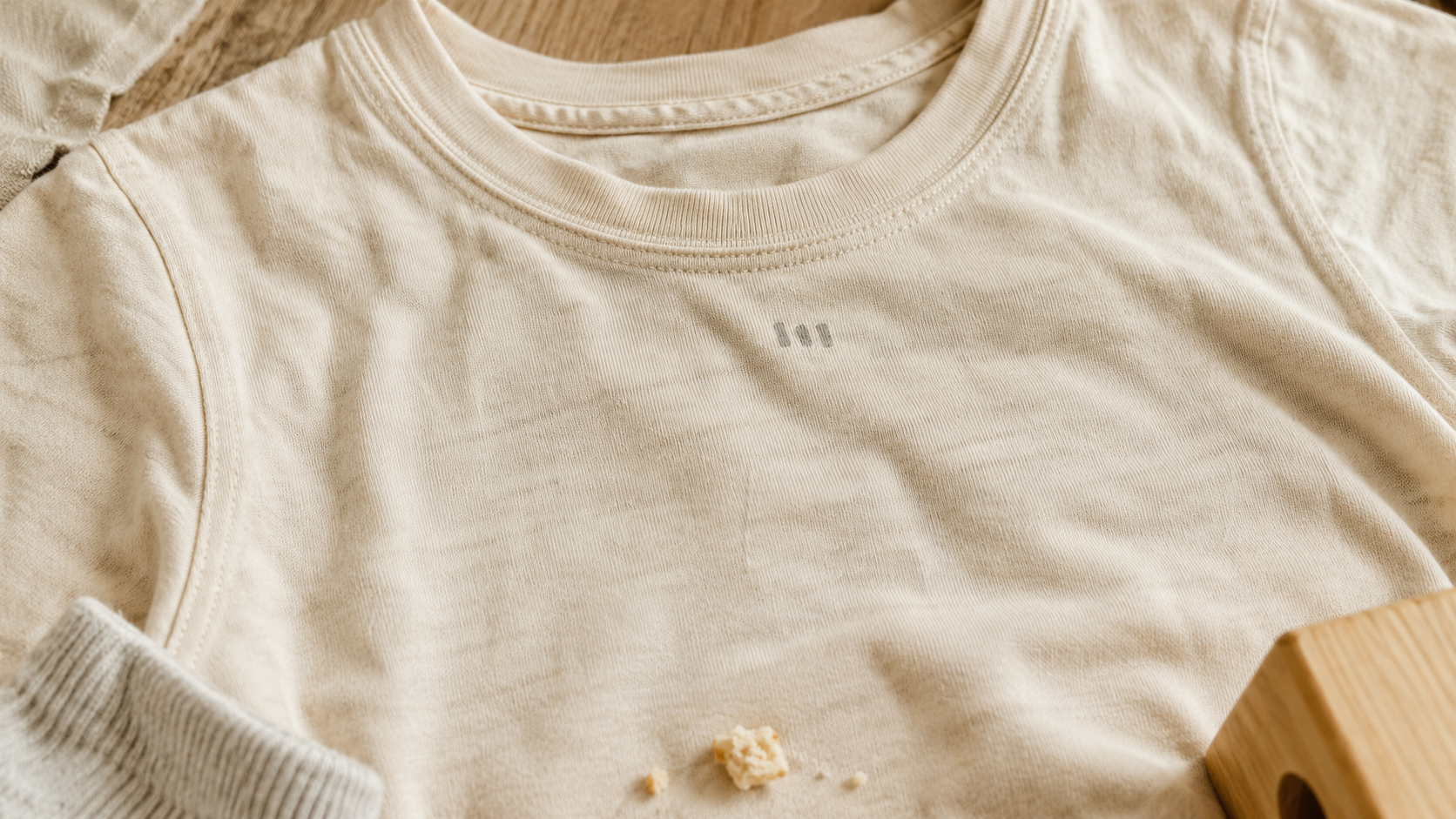
The dirt problem. Babies get dirty in predictable ways. Toddlers get dirty in ways that challenge the imagination. The working rule is: if you would not wash it on a hot cycle on a Tuesday, do not buy it for a toddler. This eliminates approximately half of the elevated children’s clothing market immediately.
Six Things Toddler Clothes Have to Handle.
Movement. A toddler’s range of motion is full-body and unpredictable. They squat to inspect things on the ground. They climb over objects sized for adults. They run with more enthusiasm than coordination. Clothes with stiff denim, structured waistbands, or restrictive cuts fight this constantly. Soft jersey knits, elasticated waists, and relaxed silhouettes do not. This is not a style preference — it is structural.
Spills. Everything that enters the toddler’s orbit eventually ends up on the toddler’s clothes. Yogurt. Marker. Mud. The unknown orange substance from daycare. The clothes need to survive washing repeatedly and genuinely — not hand-wash-only, not lay-flat-to-dry, not “colors may run.” Washable means machine washable, warm cycle, no ceremony.
Repetition. This is the most important toddler clothing rule that nobody mentions before you are deep in it: toddlers repeat. They want the same shirt every day. For weeks. The shirt needs to survive being worn and washed on that cycle without fading, pilling, or falling apart. This also means you need fewer pieces than baby clothing culture suggests — fewer, more durable things that actually get worn, not twenty rotating options that each see the laundry once.
Independence. Dressing independence starts earlier than most parents expect. By eighteen months many toddlers want to participate, and by two most have opinions about the outcome. Clothes with pull-on waistbands, wide neck openings, and no fiddly buttons or back zips make the process easier for everyone. Velcro on shoes. Elastic on pants. No closures that require an adult to intervene in what is supposed to be a two-year-old’s solo operation.
Weather. Toddlers are outside in all weather, often before anyone has confirmed what weather is actually happening. Layering systems matter more than individual pieces. A soft base layer plus a practical mid layer plus a wind or water-resistant outer layer beats any single elaborate outfit. Choose pieces that layer easily, not pieces that look good alone.
Daycare and playground life. Daycare has paint and glue and the collective output of fifteen other toddlers. The playground has wood chips, wet slides, and surfaces of unknown provenance. Whatever the child wears to either needs to be treated as fully expendable in terms of cleanliness. The best toddler clothes for daily life are not your favorite things — they are the things you are happy to see emerge at 4pm looking like they have had an adventure.
Toddlers repeat. They want the same shirt every day for two weeks. The shirt needs to survive it.
Expressive Clothing Is Not the Same as Costume Clothing.
At some point, every parent who has dressed a toddler encounters the gap between two approaches: one puts the child in something that expresses a personality; the other puts the child in something that performs one for the room. The difference matters more at this stage than at any other.
Costume-adjacent toddler clothing turns the child into a concept. The outfit exists to communicate something to the adults present — that this family has a sense of humor, that this is a particular kind of baby, that someone thought carefully about the nursery aesthetic. The child is wearing a bit. The bit wears off by the second photo.
Expressive clothing is simpler. A well-made tee in an interesting color. A phrase that is actually funny rather than trying to be. A print that is specific without being loud. Something that looks right on a kid who is moving, eating, and doing their own thing — not standing still for documentation. Clothes that match the personality of the actual child rather than performing a personality for the room.
The test is simple: would the child wear this to the playground on a regular Wednesday and still look like themselves? If the honest answer involves the word “costume” or “for photos,” that is useful information about what kind of piece you are actually buying.
When the Humor Fits the Kid, Not Just the Joke.
Funny toddler clothing works for the same reason funny baby clothing works when it is done well: the joke starts from an accurate observation rather than a template. The toddler years offer considerably more material than the newborn stage — because the toddler has opinions now, and opinions are funnier than the generic “I just got here” premises that dominate the baby clothing market.
Babies are funny because of the gap between their size and their demands. Toddlers are funny because they have developed actual personalities, preferences, and positions — and then have to live in a body and a vocabulary that cannot yet fully support them. That gap is genuinely rich territory.
What works:
Short, dry observations about toddler life. “Currently negotiating.” “I have thoughts.” “Already in charge.” These land because they are accurate rather than because they are trying to be funny. The humor is in the recognition.
Adult language applied to a very small person. The same displacement humor that works on baby clothing scales into toddler territory. The gap between the vocabulary and the person wearing it does the work.
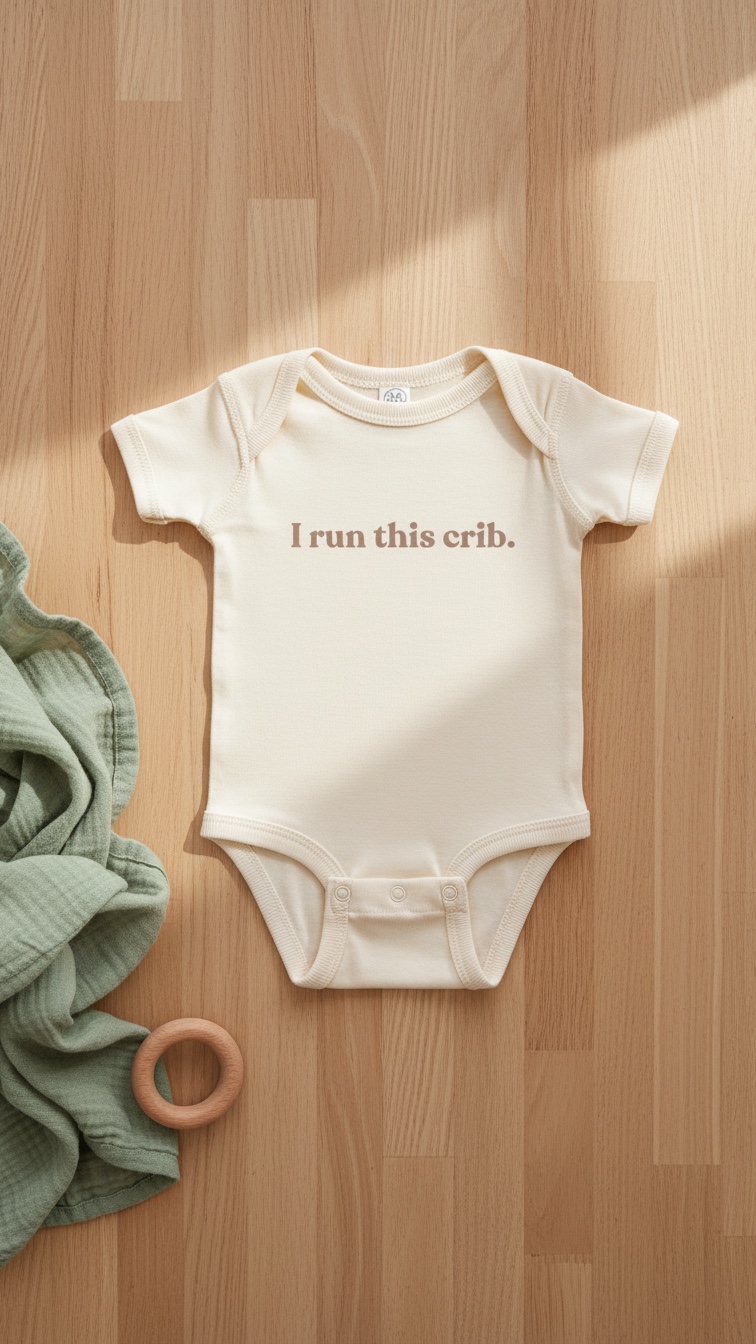
Single phrase, clean typography, one color. No graphic explaining the joke. No drop shadow. No secondary line softening or expanding the premise. One phrase that trusts the reader to get it. This is the most reliable format and the one most likely to survive twenty washes.
References to specific toddler behaviors. Snack negotiation. Nap refusal. Strong positions on footwear. The jacket that must never be zipped. These are specific to this stage, which is why they are funnier than generic baby-humor premises.
What does not transfer from baby to toddler:
Newborn-centric humor ages out fast. Sleep deprivation jokes, “I just got here” premises, birth-announcement energy — a two-year-old wearing these is wearing something designed for a different chapter. The joke no longer fits the person.
For more on the humor question across both stages, funny baby clothes: what feels clever and what feels tacky covers the full reasoning.
A Practical List of What Does Not Survive Toddlers.
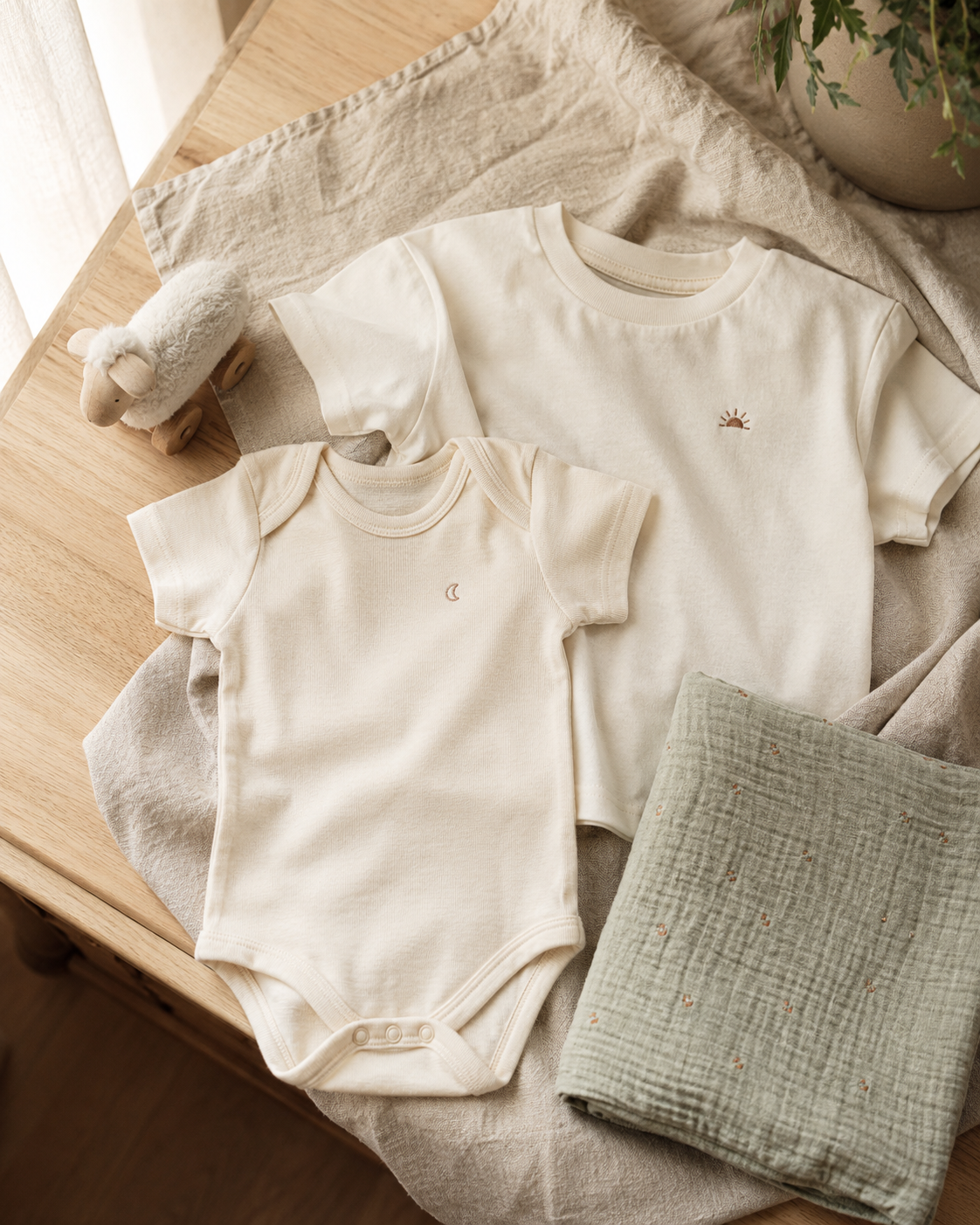
Stiff denim and structured fabrics. These look good in photos. They restrict movement, scratch against active skin, and do not wash on the schedule toddler clothes require. Soft knit fabrics — jersey, french terry, brushed cotton — are the correct default for anything expected to be worn more than twice.
One-photo clothes. The elaborate romper. The tiny blazer. The dress that requires the child to stay reasonably still. These are costumes, not clothes, and they are fine to have one of for a specific occasion. They are not a wardrobe strategy.
Loud novelty graphics. Three colors, a cartoon face, a secondary joke explaining the primary joke. These are optimized for the store display, not for the Tuesday morning daycare drop-off. They date quickly and wash badly. One color, one phrase, natural fabric — that combination almost always works better and for longer.
Overdesigned sayings. If the phrase requires more than a glance to read, it is doing too much. A joke that needs explanation or a phrase that only works if you already know the reference loses something every time it has to be re-explained. Restraint is the rule.
Outfits parents have to perform. The matching set that prompts commentary at the grocery store. The conceptual piece that is funny once and then requires the parent to keep contextualizing it. Toddler clothing should not create ongoing social obligation for the adult. The child is already creating plenty of that.
Anything that makes bathroom independence harder. By two years, most toddlers are at some stage of potty learning. Overalls with tricky clasps, onesies that require full undressing, any closure that demands adult assistance in a moment of urgency — these create predictable problems. Choose clothes that a toddler can manage partially themselves, or that an adult can assist with quickly.
“The test: does it look right on a kid who is moving, eating, and doing their own thing — not waiting for a photo?”
Toddler clothes that only work in photos are not actually toddler clothes. They are performance pieces in a small size.
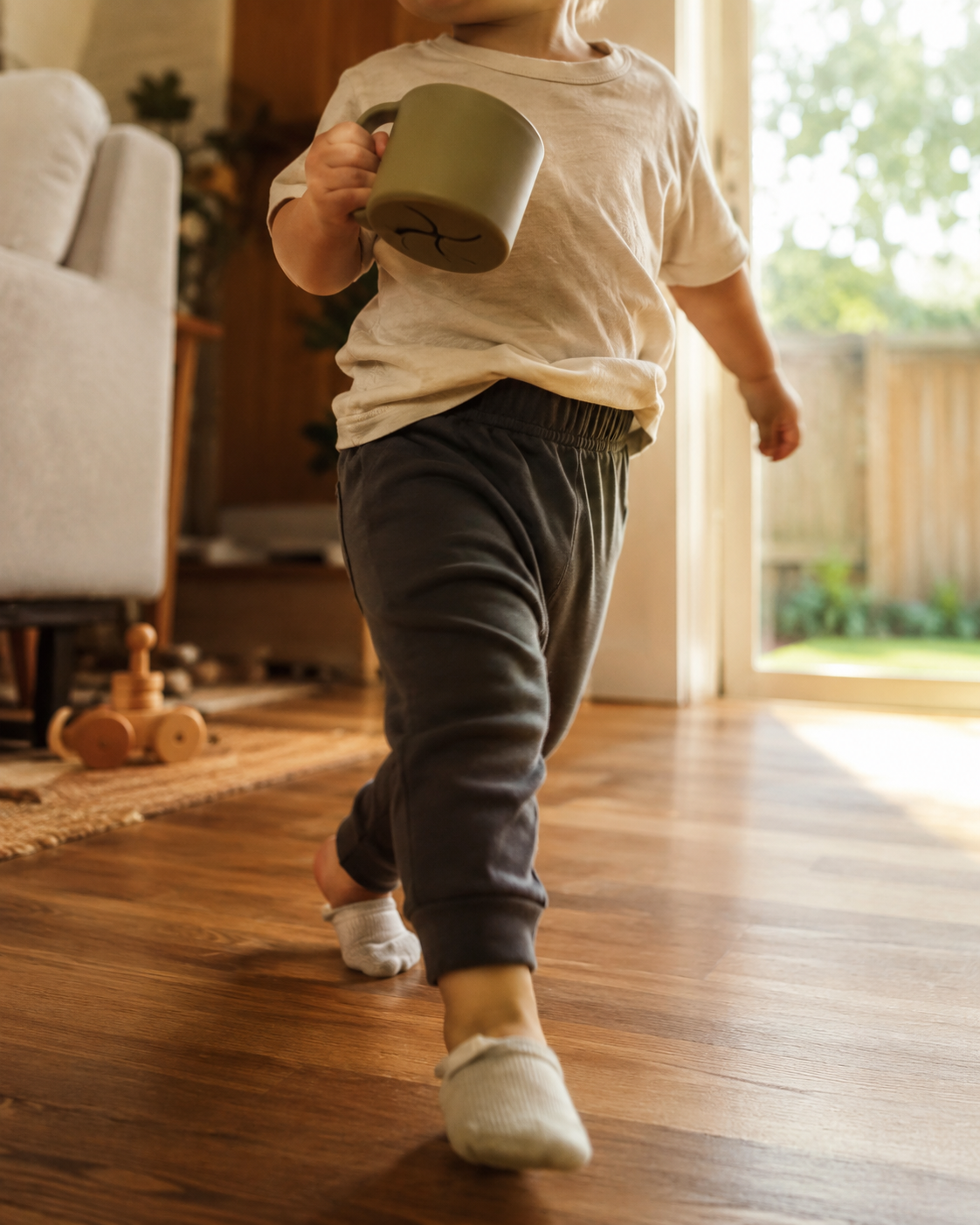
What to Wear for the Actual Situations.
These are not mood-board concepts. They are the situations that occur.
Snack negotiation (daily, multiple times). Soft tee, elastic-waist pants or leggings, no elaborate top layer. Easy access, easy wash. The outfit should require zero decisions. The snack negotiation is already requiring decisions.
Playground. The most durable thing in the wardrobe. Soft knit pants with knee room. A tee that can take wood chips and wet slide residue. Sneakers with velcro. Nothing you would be upset to see destroyed. The playground is where clothes go to become outdoor clothes permanently.
Daycare. Same logic as playground, multiplied by five days a week and the creative output of a full classroom. Label everything. Choose colors that do not show things. Avoid white. The daycare outfit is the working uniform — dress for durability, not appearance.
Birthday party. One step up from daily wear, not a formal event. A slightly nicer tee or simple cotton dress, same soft-fabric rules. They will get cake on it. That is not a problem to prevent — it is an outcome to accept and dress accordingly for.
Family outing. The outfit most likely to be photographed, so this is where personality matters most. A well-chosen tee with something worth wearing. Neat joggers or a soft skirt. Nothing restrictive. You want to walk fast, pick them up when the moment calls for it, and end up somewhere different than planned without the clothes becoming a problem.
“I refuse pants” energy. This is a real category. For the days when the negotiation is not worth having: a longer tee worn as a dress, soft shorts in warm weather, or a jersey dress becomes the path of least resistance. Some toddlers go through a pants-optional phase. The correct move is to dress around it rather than against it.
Made for the Stage When the Kid Has Opinions.
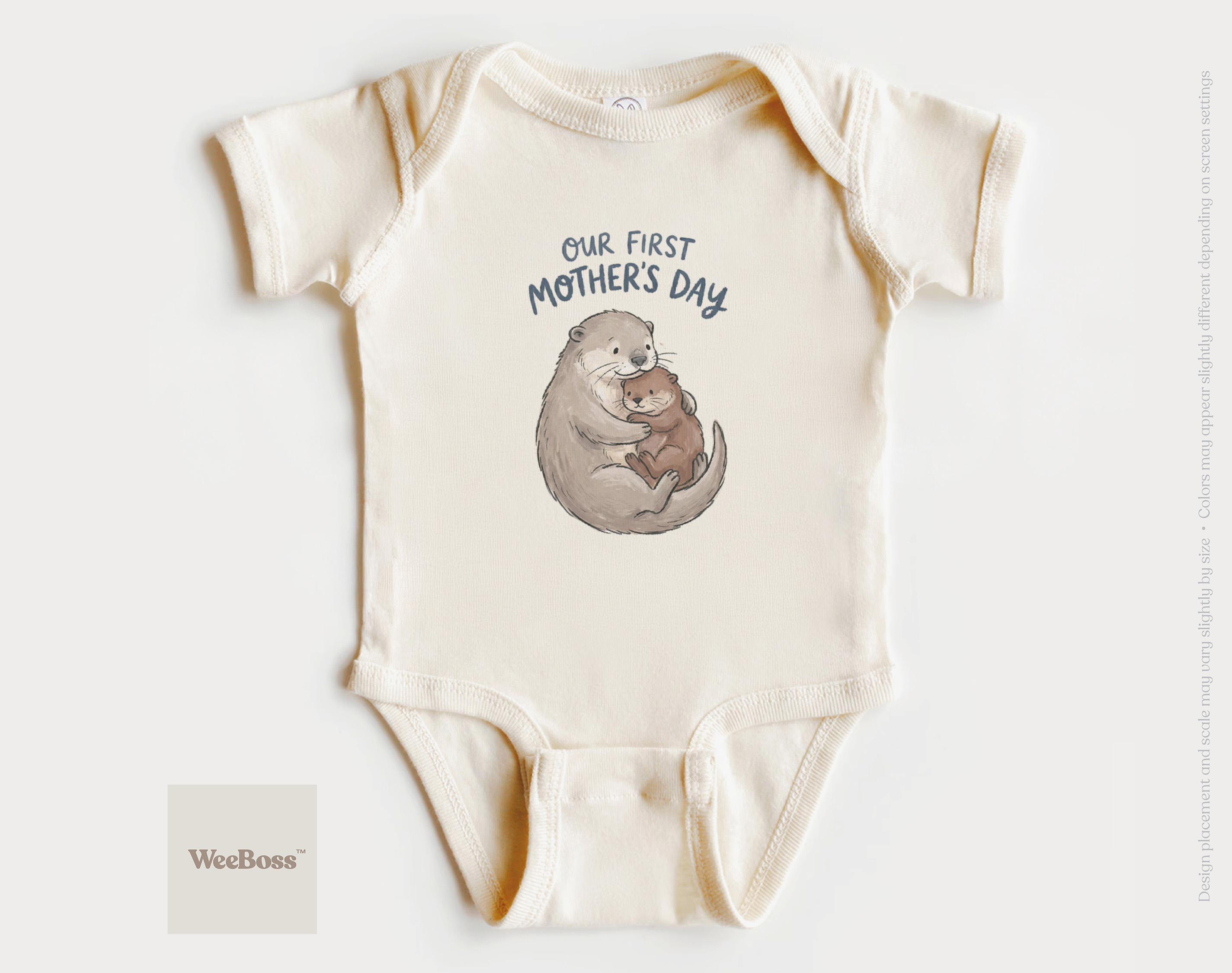
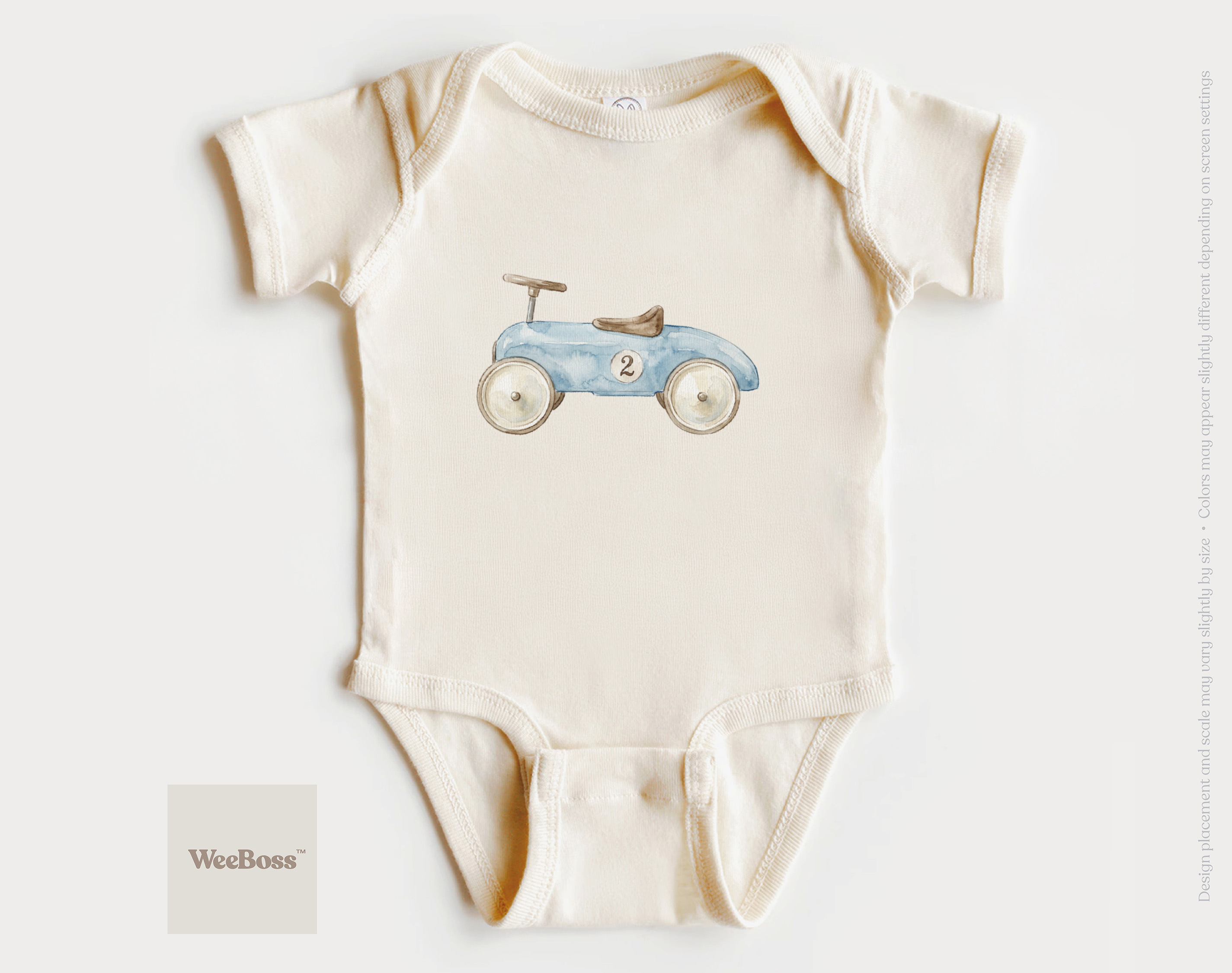
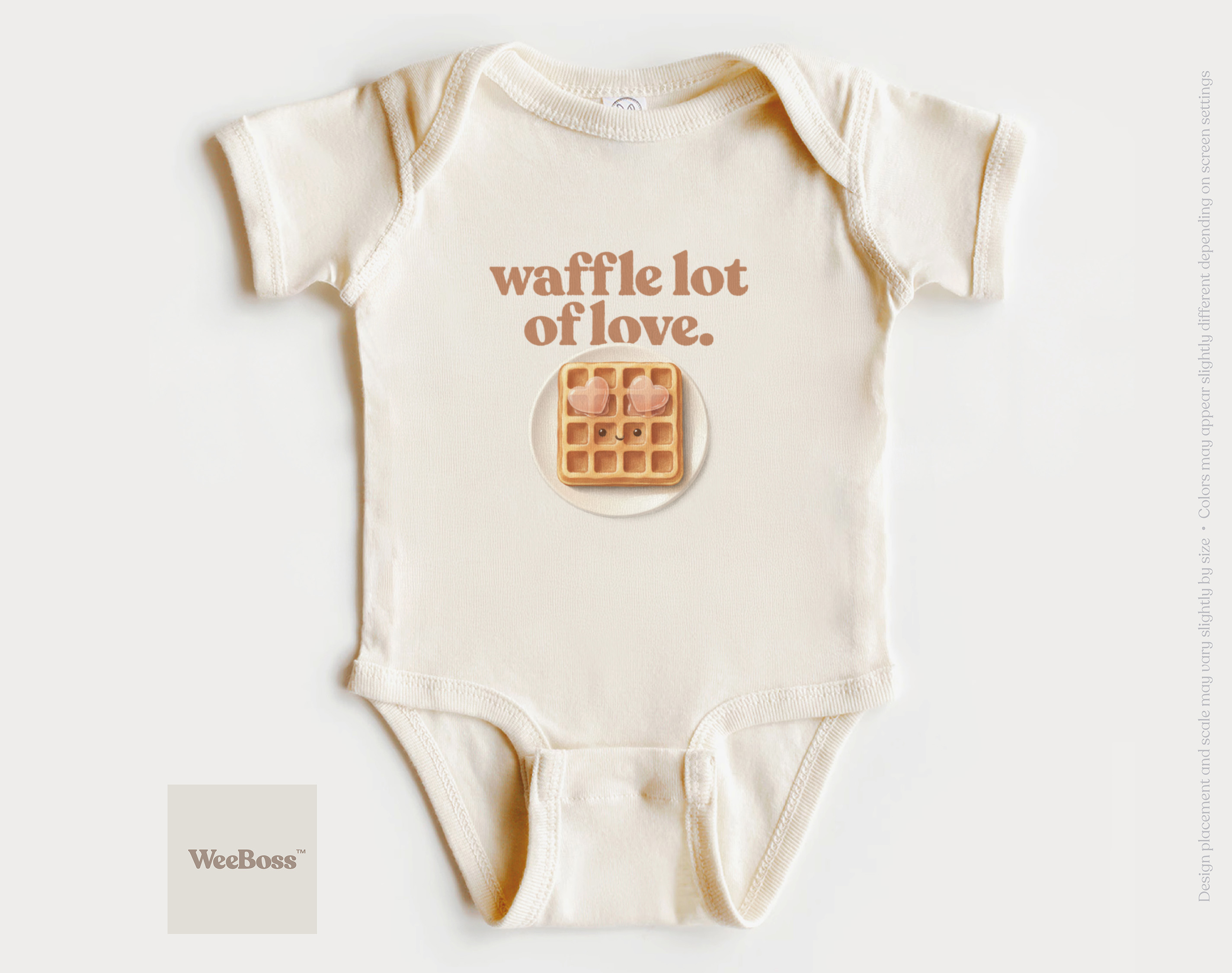
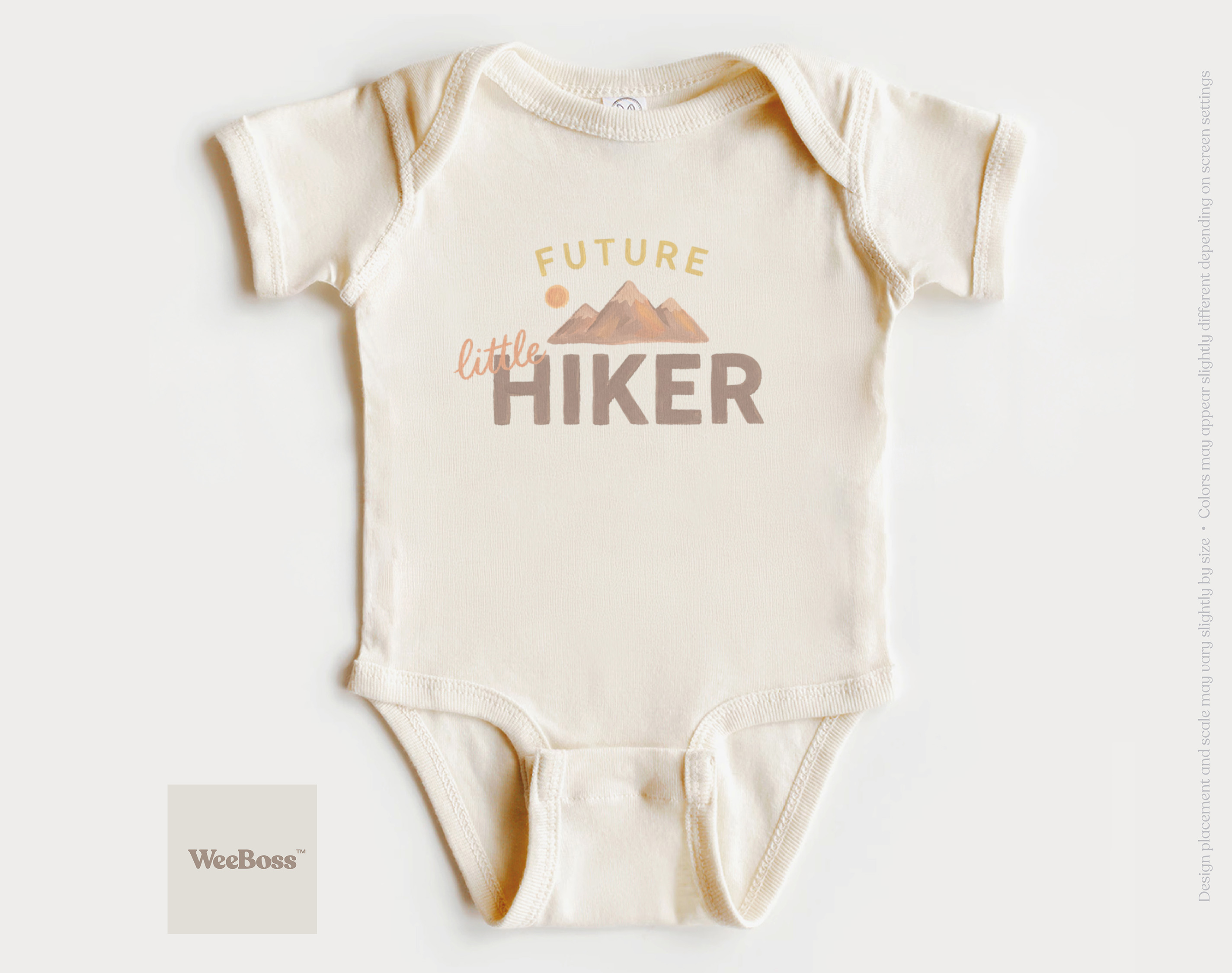
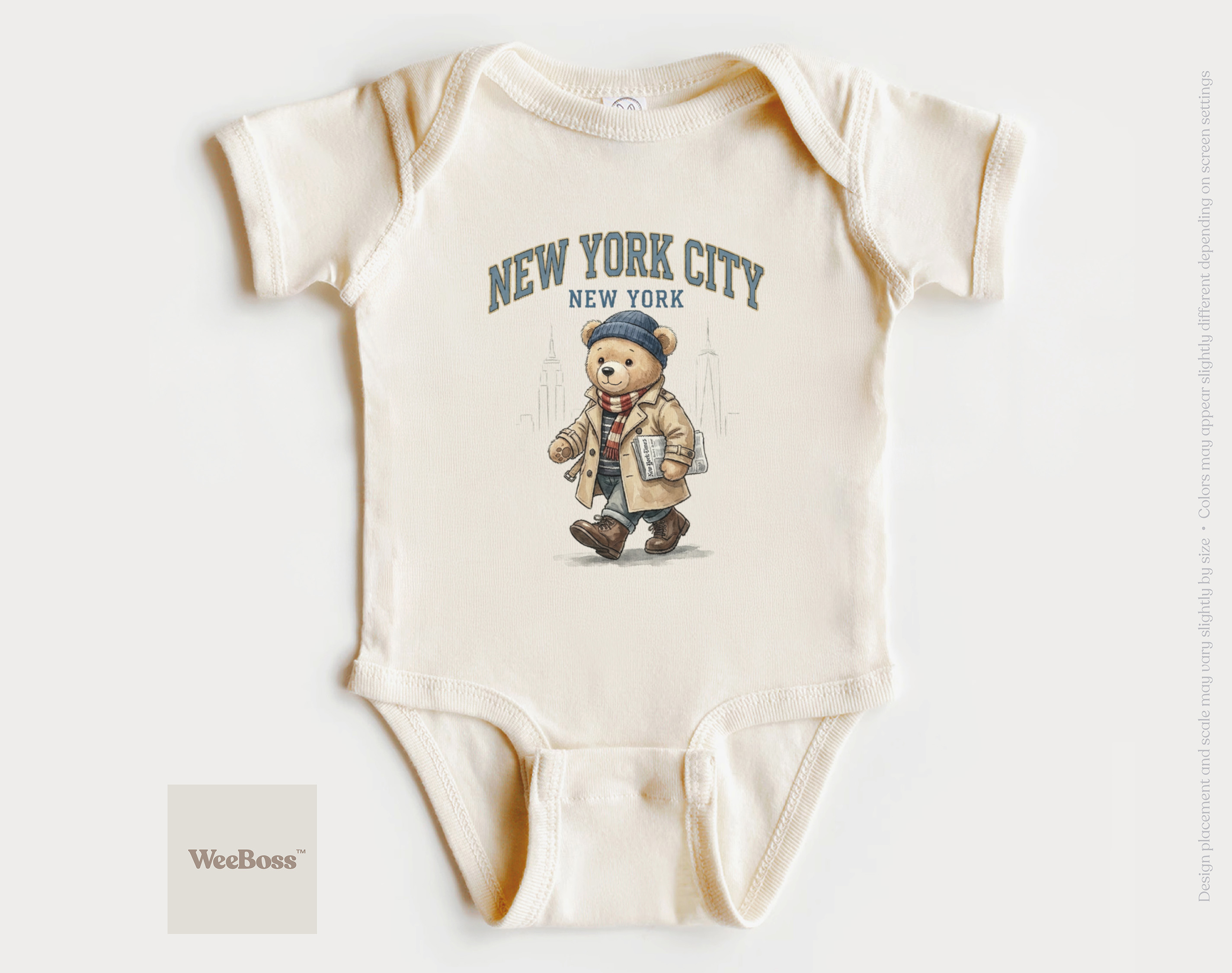
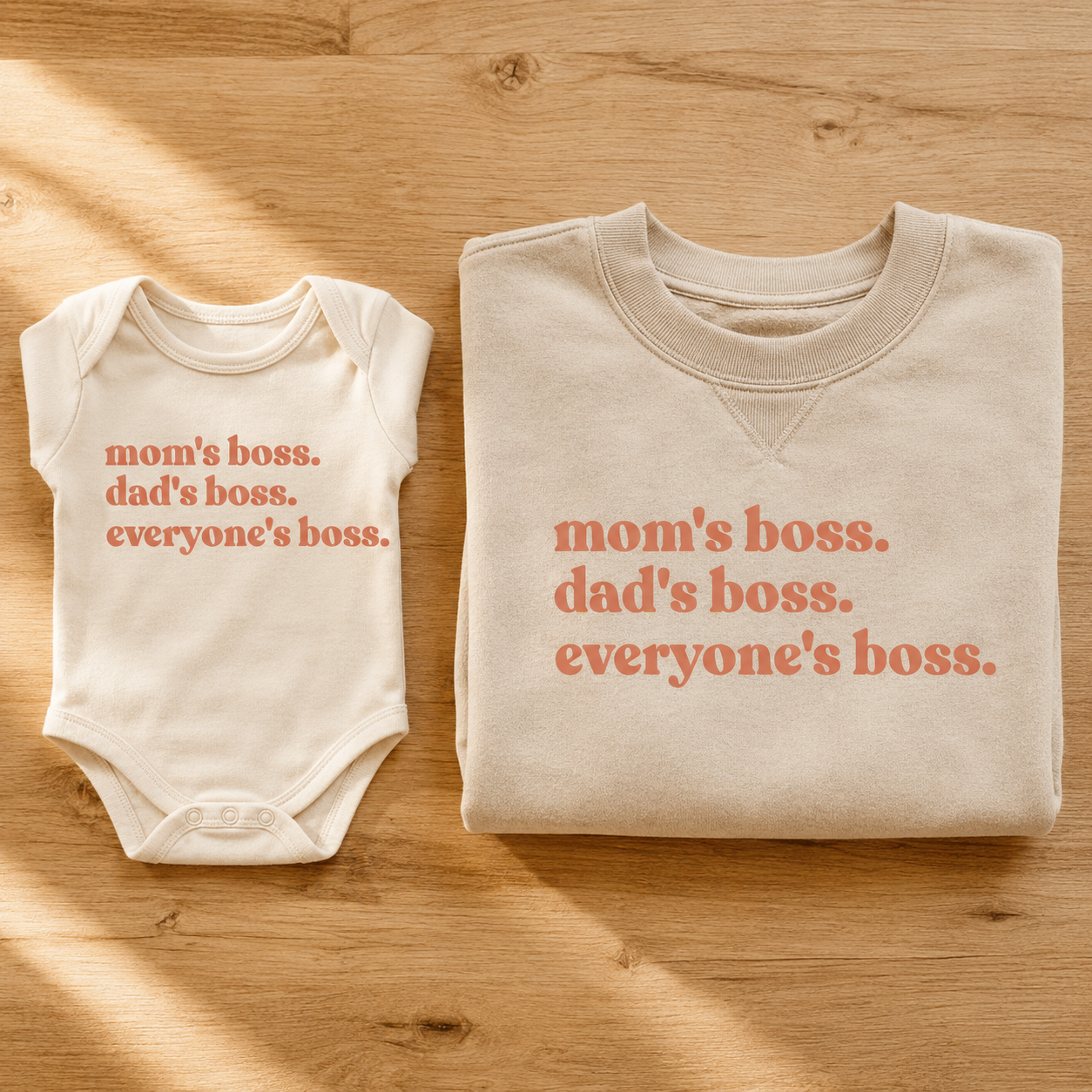
WeeBoss makes baby and toddler tees and bodysuits designed around the observation that the kid already has a personality, and the clothes should reflect that without performing it. The designs start from specific, accurate observations about early life — the toddler who has already decided what is worth getting up for, the one who is running household operations from a height of thirty-four inches, the one with strongly held positions about snacks — and translate those into single-phrase, clean-typography designs on soft natural fabric.
That premise fits the toddler stage specifically. Not costume energy. Not novelty-shelf energy. Clothing that makes sense on a kid who is moving, eating, and already in charge of considerably more than anyone planned for.
For more on what fits this stage beyond clothing, toddler gifts for parents who don’t want more plastic toys covers the full category.
More on Toddler and Baby Clothing.
- Funny Baby Clothes: What Feels Clever and What Feels Tacky — the humor guide that applies equally to the toddler stage
- Toddler Gifts for Parents Who Don’t Want More Plastic Toys — what to give a toddler when the playroom is already full
- Matching Family Outfits That Don’t Feel Cheesy — when the whole family needs to coordinate
- Baby Bodysuit vs. Romper: What’s the Difference? — useful context for the baby-to-toddler clothing transition
- What Size Baby Clothes to Buy as a Gift — size logic that covers the toddler range too
The Short Version of Everything Above.
Toddler clothes work when:
- The fabric is soft enough to survive daily wear and frequent washing without deteriorating.
- The silhouette allows full movement without restriction.
- The closures are manageable by a small person, or by a distracted adult in a hurry.
- The humor, if present, comes from an accurate observation rather than a punchline template.
- The overall effect is a kid who looks like themselves — not a kid in a costume.
The stage when toddlers have opinions is also the stage when they will tell you, loudly and with conviction, what they want to wear. Getting ahead of that conversation means having a wardrobe that gives them good options — things that are durable, moveable, and expressive in a way that actually fits the person inside them.
The best toddler clothes are not the most expensive. They are the ones that are still being worn on day forty.